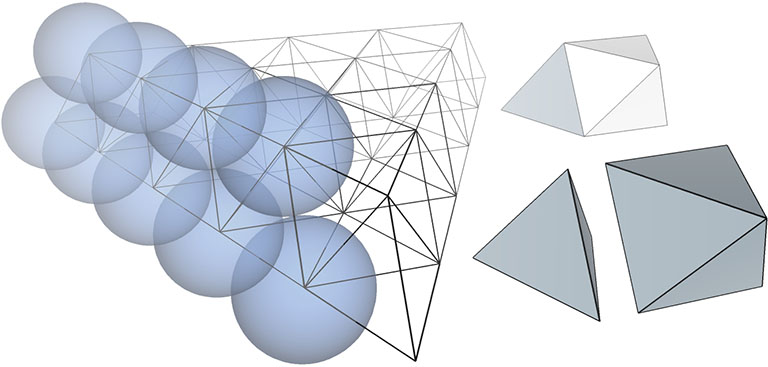
“When the centers of equiradius spheres in closest packing are joined by most economical lines, i.e., by geodesic vectorial lines, an isotropic vector matrix is disclosed, ‘isotropic’ meaning “everywhere the same,” ‘isotropic vector’ meaning “everywhere the same energy conditions.” This matrix constitutes an array of equilateral triangles that corresponds with the comprehensive coordination of nature’s most economical, most comfortable, structural interrelationships employing 60-degree association and disassociation. Remove the spheres and leave the vectors, and you have the octahedron-tetrahedron complex, the octet truss, the isotropic vector matrix.” — R. Buckminster Fuller, Synergetics, 420.01
“Euclid was not trying to express forces. We, however … are exploring the possible establishment of an operationally strict vectorial geometry field, which is an isotropic (everywhere the same) vector matrix. We abandon the Greek perpendicularity of construction and find ourselves operationally in an omnidirectional, spherically observed, multidimensional, omni-intertransforming Universe.” — ibid. 825.28
The vector equilibrium (VE) and the isotropic vector matrix constitute the core of Fuller’s geometry. Its discovery is one of Fuller’s earliest memories, from a kindergarten class in his childhood home of Milton, Massachusetts. Given semi-dried peas and toothpicks, and a visual deficit as yet uncorrected by the strong glasses he wore all his life, he fumbled sightlessly, and through touch alone constructed what he would later name the octet truss. His classmates constructed cubes and the gabled house-like shapes they were familiar with. Fuller constructed something that satisfied his sense of touch rather than his sense of sight, a sense which could easily have been prejudiced by the cubes and right angles of his built environment. Instead, his fingers naturally sought out and found the triangle, the tetrahedron, and the octahedron, arrangements which, unlike squares and cubes, held their shape and could not be deformed. He credits his kindergarten teacher, Miss Parker of Milton, Massachusetts, with the discovery; it was her praise and kind remarks that fixed the experience in his memory and, eventually, would inspire a lifelong critique of conventional geometry, and his explorations into the energetic-synergetic geometry of nature.
The isotropic vector matrix is formed by connecting the centers of uniform, radially close-packed spheres. Removing the spheres and leaving only the lines (vectors) between them reveals a complex of octahedra and tetrahedra, i.e., the octet truss.
The isotropic vector matrix is the geometric analog to Fuller’s more general statement of Avogadro’s proposition, that “under identical, unconstrained, and freely self-interarranging conditions of energy all elements will disclose the same number of fundamental somethings per given volume.” Fuller’s geometry replaces the abstract concept of infinite lines and line segments with the physical concept of energy vectors. A geometric model of Avogadro’s equilibrium state must have all energy vectors of equal length, i.e. equal products of mass times velocity, and all interacting at the same angles. All vectors in the isotropic vector matrix therefore are of equal length, i.e. the diameter (or two times the radius) of the uniform sphere, and all interact with the others at exactly 60°.
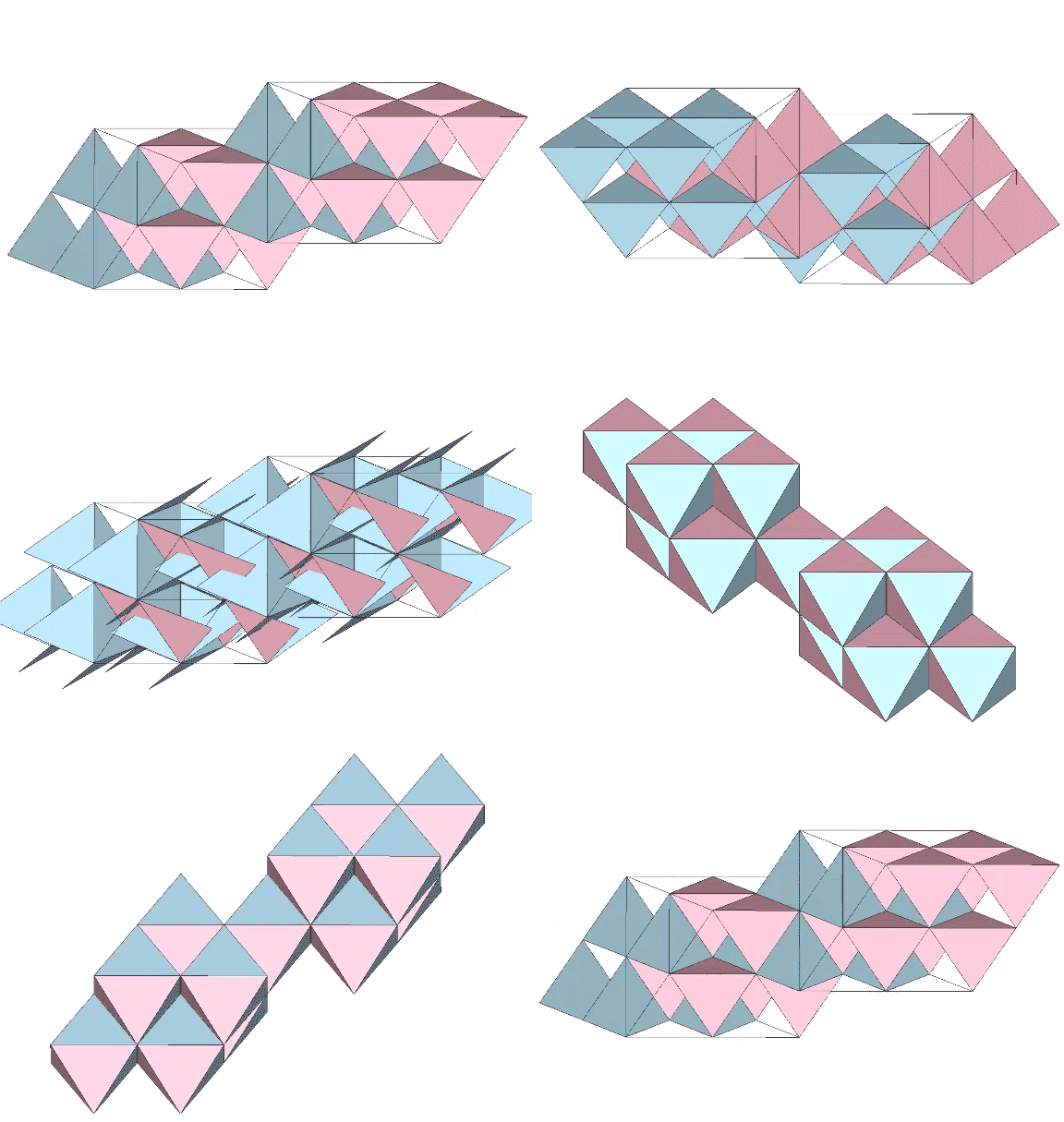
Construction can be accomplished by vertex-bonded (positive or negative) tetrahedra, or by edge-bonded octahedra. Positive-tetrahedron or negative-tetrahedron constructions (but not both) produce a matrix of single vectors, while the octahedron constructions produce a matrix of doubled vectors. Edge-bonding positive and negative tetrahedron together produces a doubled-vector matrix complementary to the doubled-vector octahedron construction.
Each of the two constructions (edge-bonded positive and negative tetrahedra, and edge-bonded octahedra) can be transformed into the other by turning themselves inside out. Note that this inside-out transformation results in the same matrix, one emphasizing the tetrahedra and the other emphasizing the octahedra; there is no shifting of vertices or exchanging of spheres and spaces as in The Jitterbug transformations.
The isotropic vector matrix consists of tetrahedra with octahedron spaces, or of octahedra with tetrahedron spaces. One transforms into the other suggesting that the octahedron may be understood as a positive-negative pair of tetrahedra turned inside out.
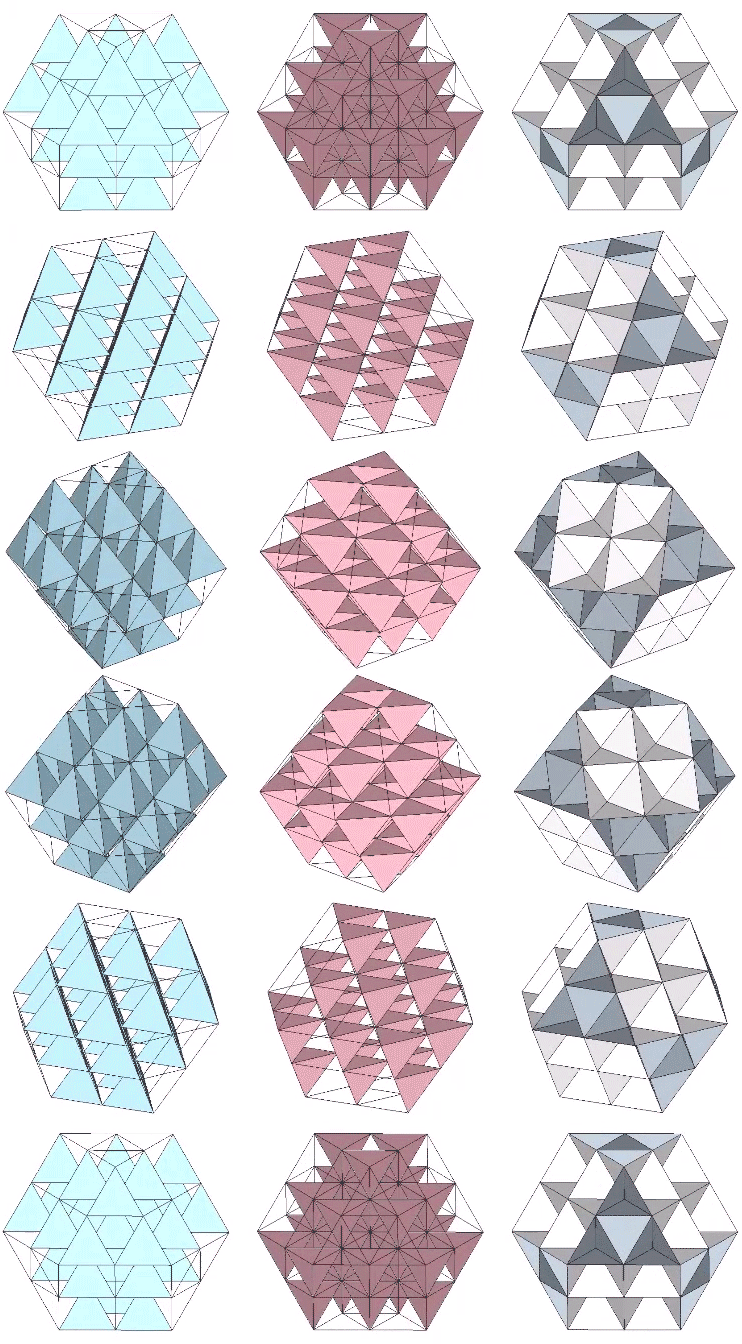
All of the models of the isotropic vector matrix can be broken down into the following:
spheres,
spaces, and;
interstices.
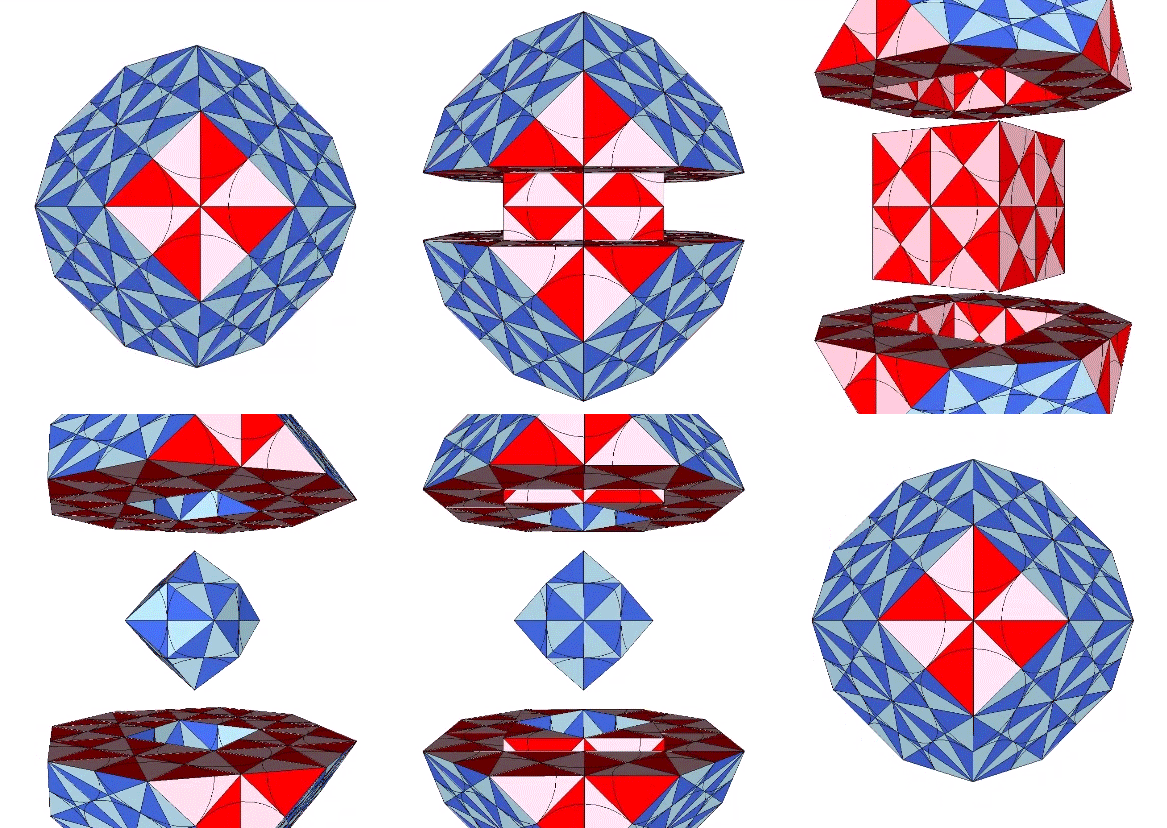
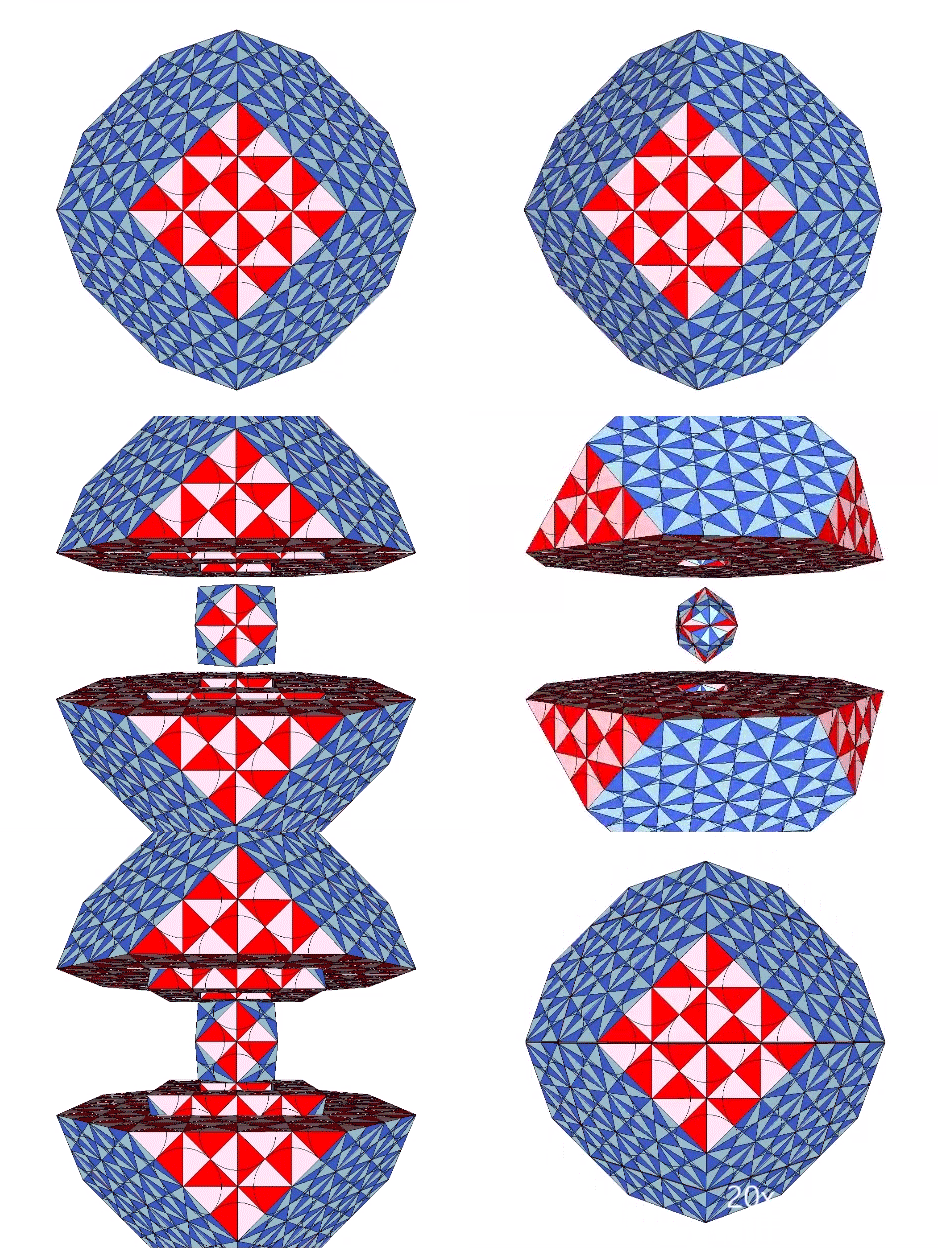
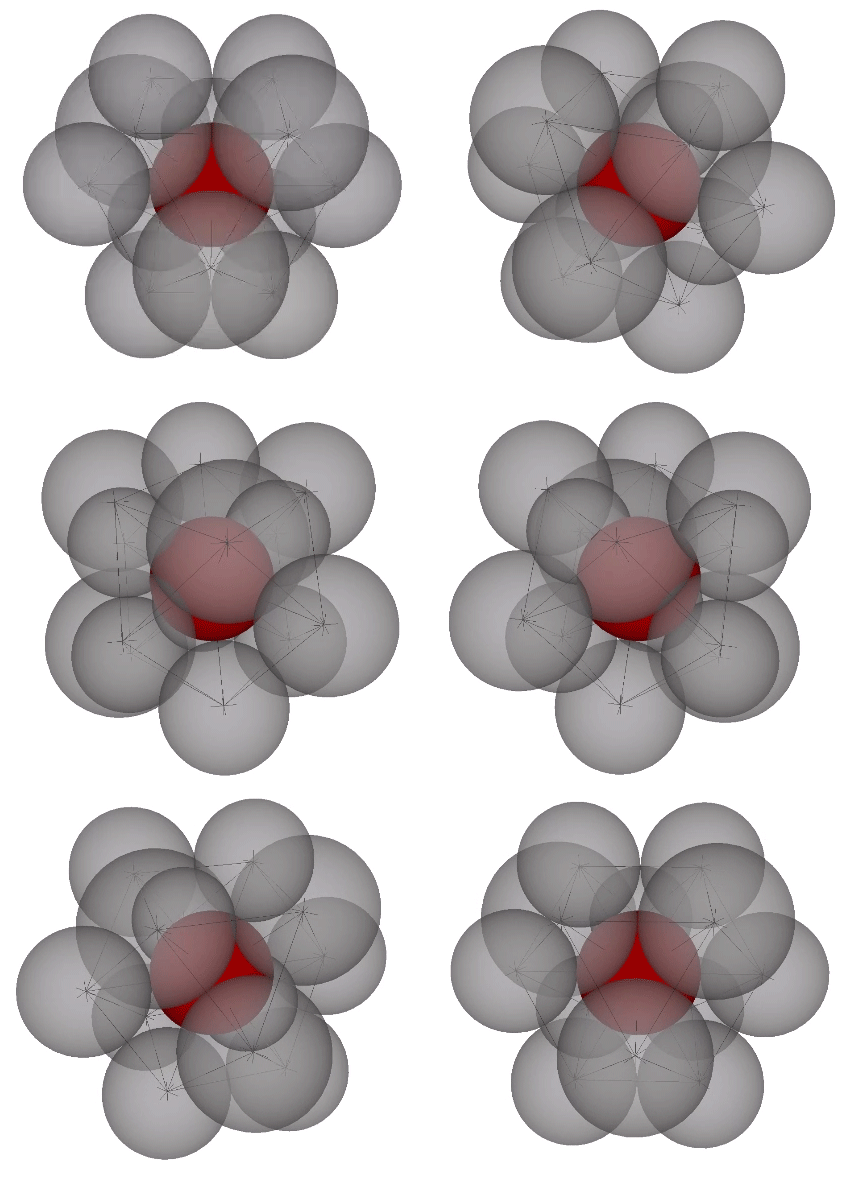
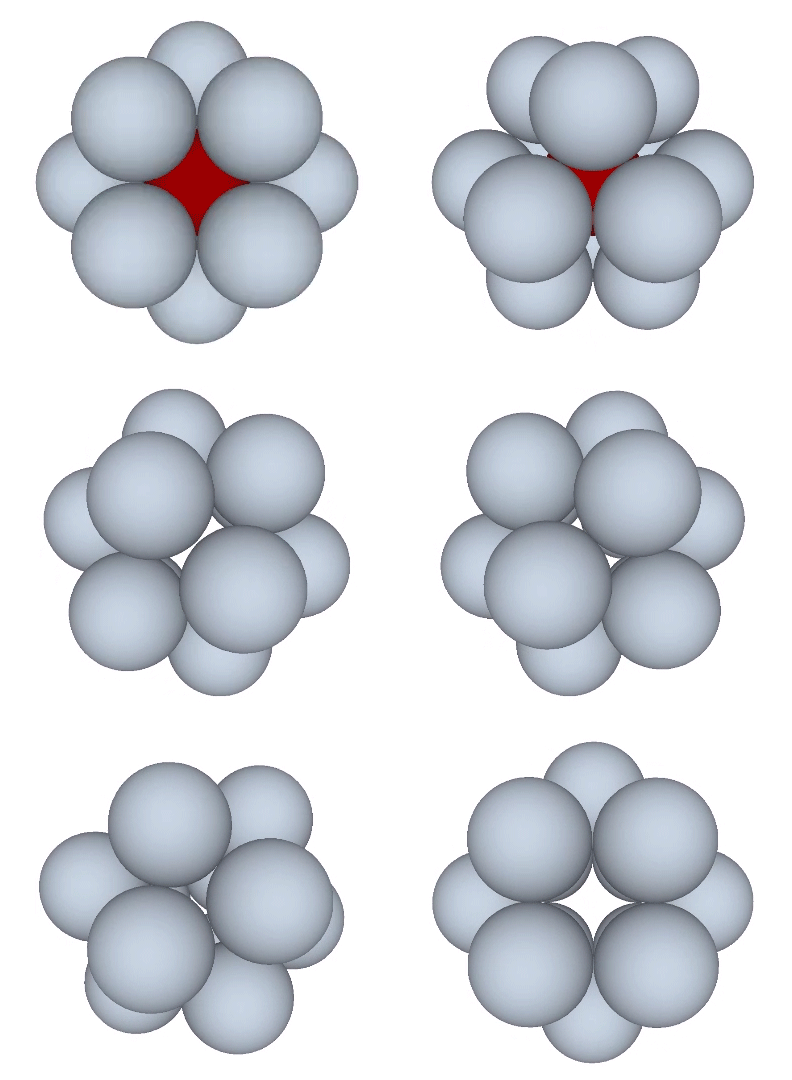
In the vector model, the sphere is represented by the vector equilibrium (VE), the space by the octahedron, and the interstices by positive and negative tetrahedra. In the quanta model, spaces and spheres are represented by the two constructions of rhombic dodecahedron, and the interstices appear as tetrahedra or cubes. In the spheres and interstitial models, the spheres are represented, obviously, by spheres, the spaces are represented by concave VEs inside of the octahedra, and the interstices are represented as concave octahedra inside of the tetrahedra.
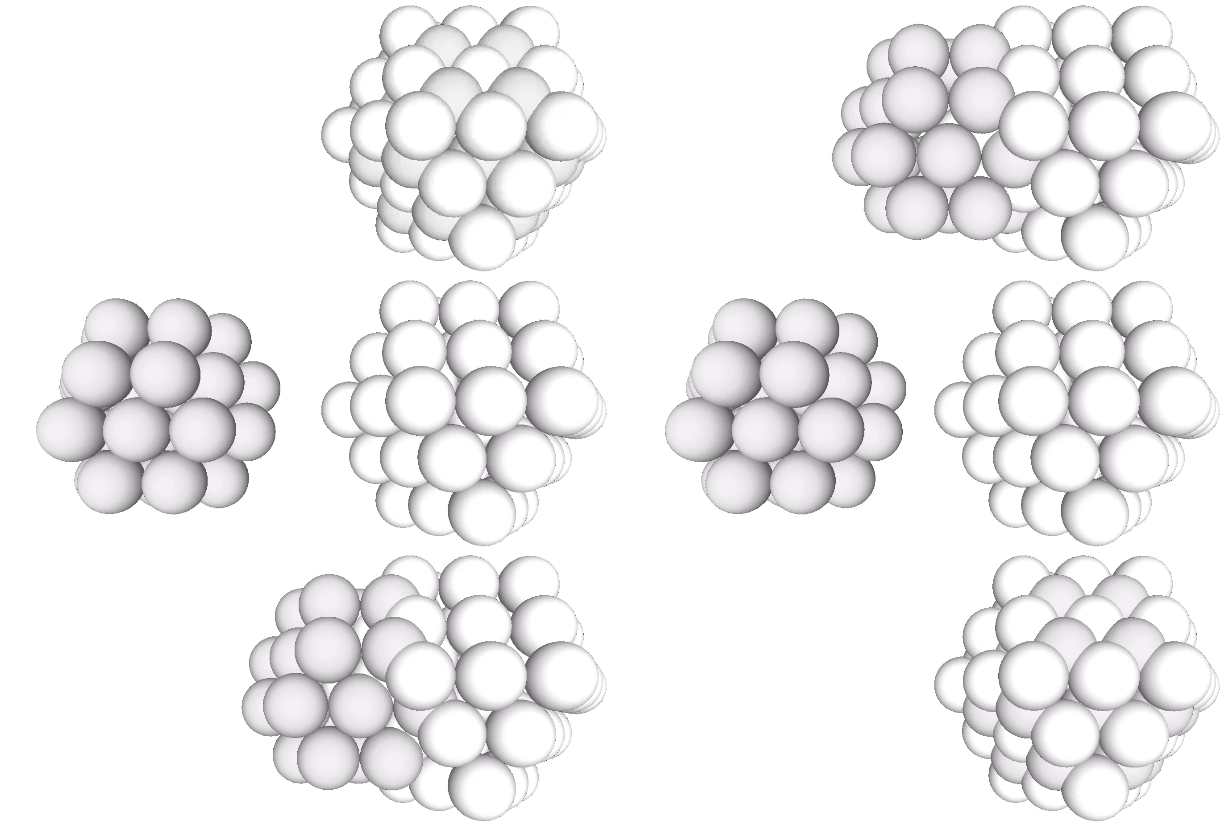
The isotropic vector matrix consists of spheres (left); interstices (middle); and spaces (right). Each is shown as it is represented in the vector model (top), quanta model (middle), and as radially close-packed spheres (bottom).
The second definition applies to a subset of the first. Fuller noted that truncations through the vertices and edges of the regular tetrahedron produces a tetrakaidecahedron with six square and eight hexagonal faces. (Truncating the faces will produce only a smaller tetrahedron.) The tetrakaidecahedron has fourteen faces, lines through the centers of which define seven axes of spin. Coordinated truncations produce the Kelvin truncated octahedron, which is associated with nuclear domains in the isotropic vector matrix, and with the optimal cellular packing of the Weaire-Phelan matrix (see Tetrakaidecahedron and Pyritohedron).
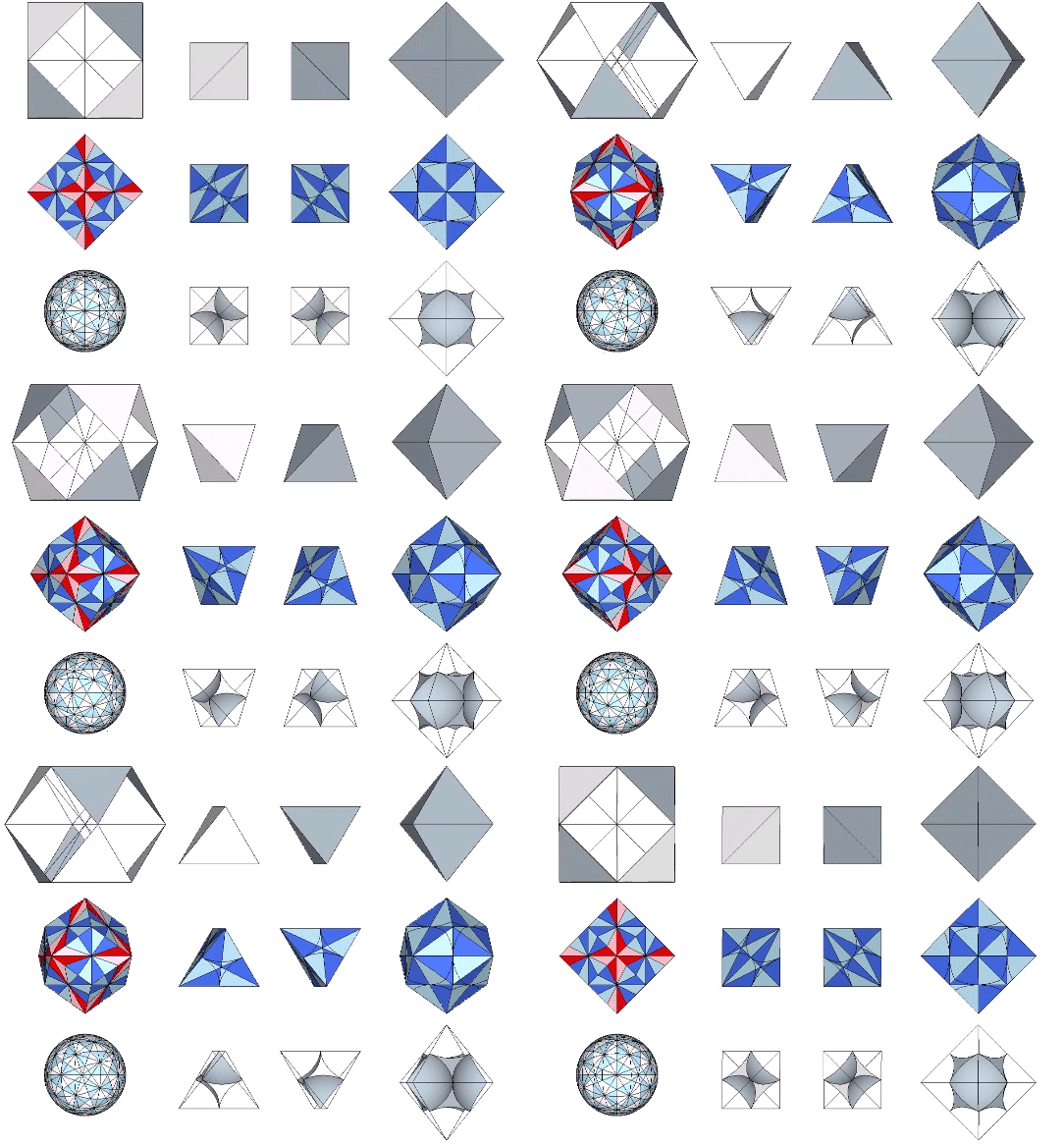
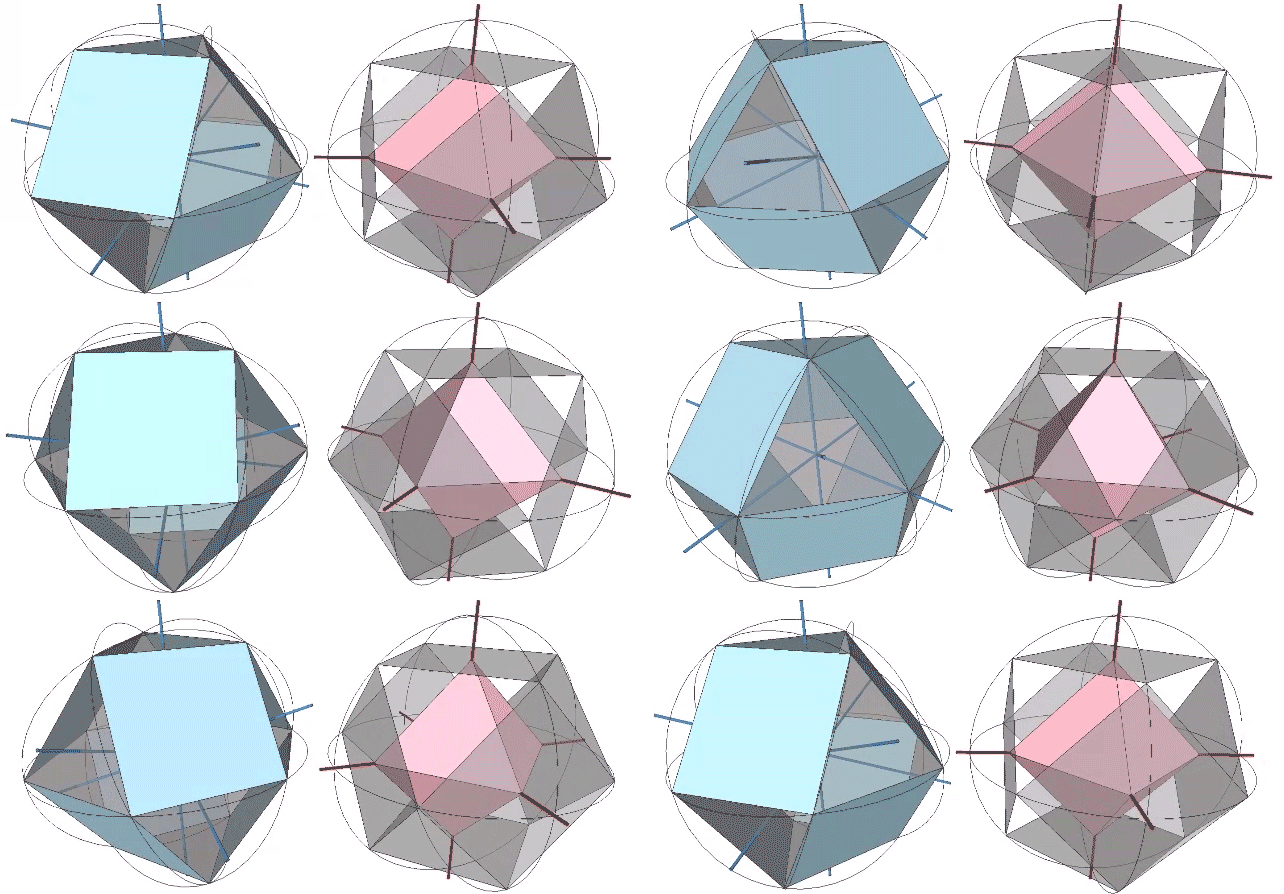
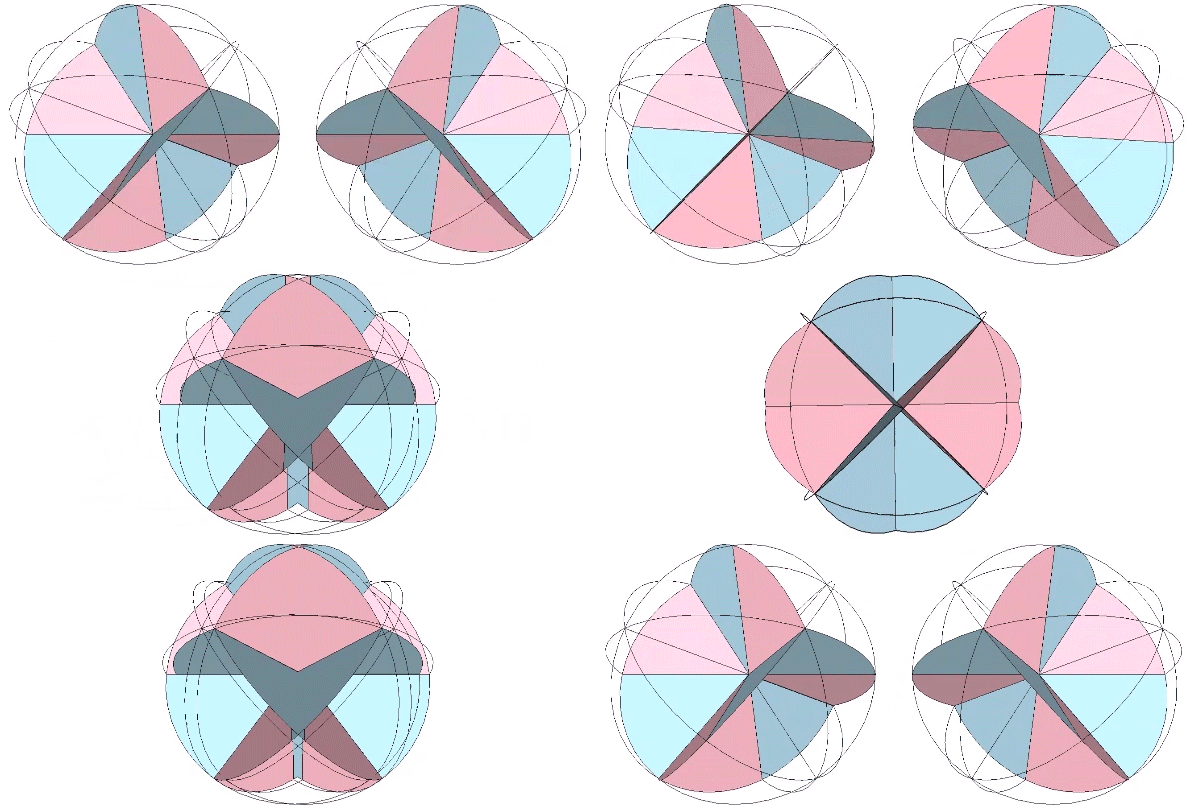
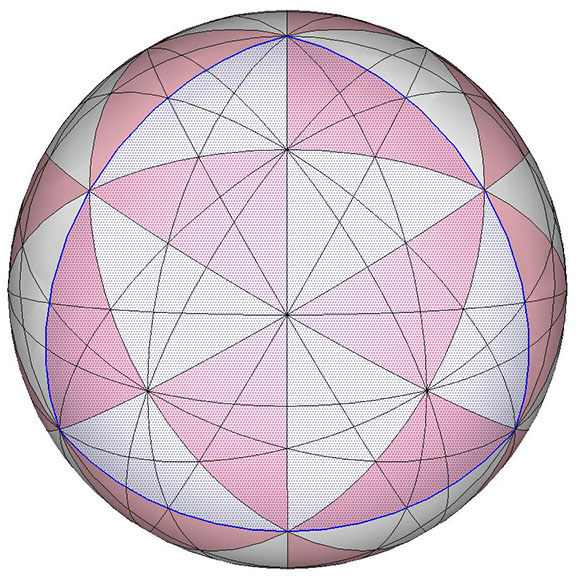
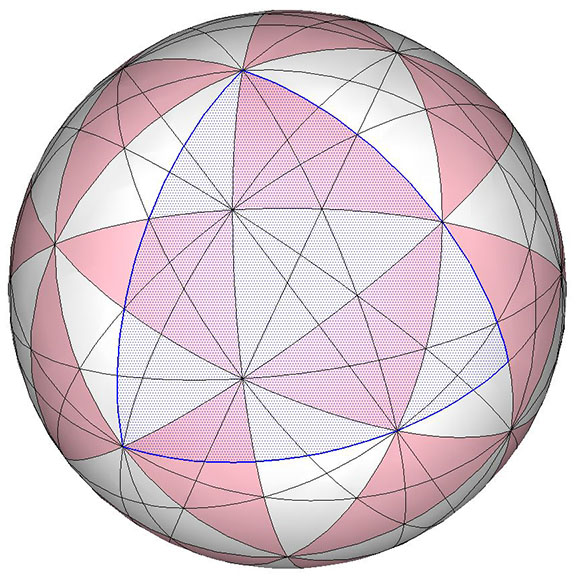
The Seven Axes of Symmetry are identical with the seven face-to-face axes of the VE, and correspond to four of the icosahedron’s ten face-to-face axes and three of its fifteen edge-to-edge axes. The great circles defined by the set of 4 axes discloses the spherical VE (red in the figure below), and the great circles defined by the set of 3 axes defines the spherical octahedron (blue in the figure below).
The great circles defined by the Seven Axes of Symmetry disclose the spherical vector equilibrium (pink) and spherical octahedron (blue).
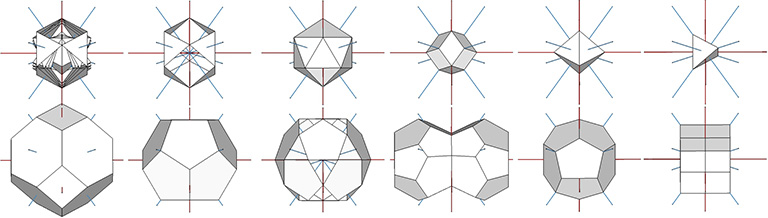
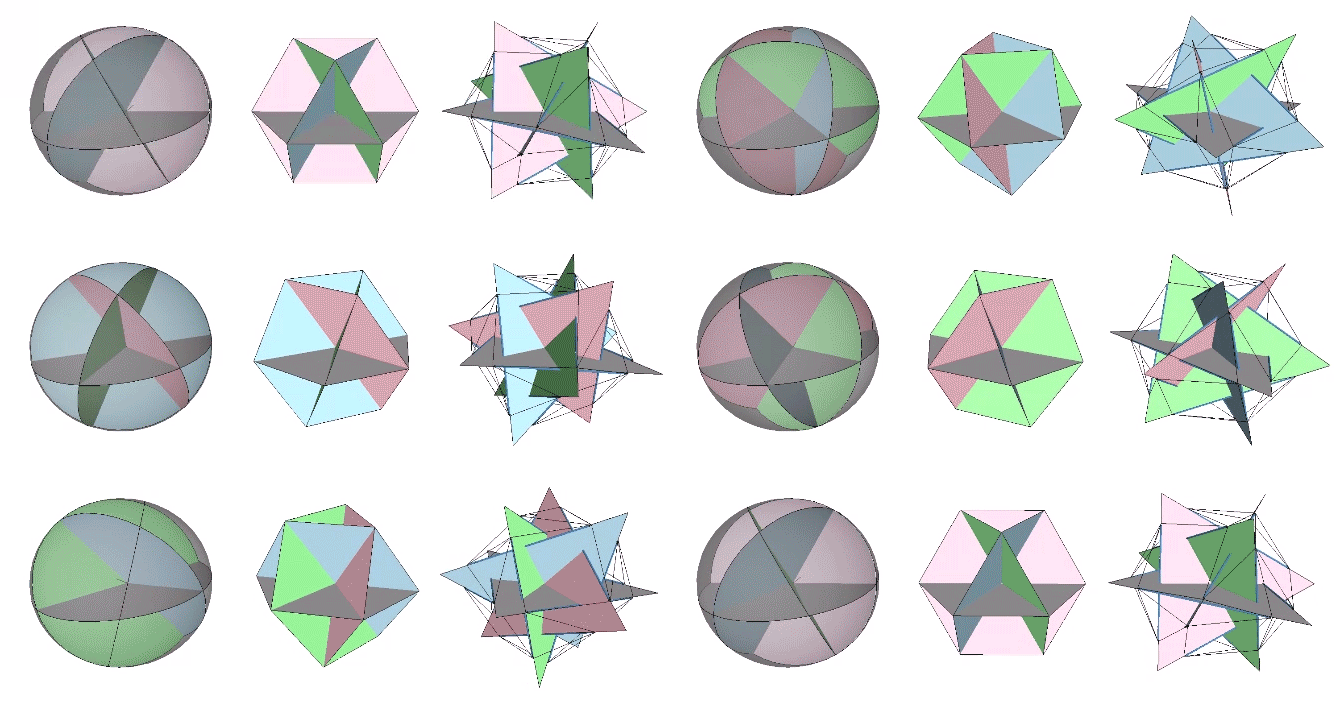
All the regular polyhedra, as well as other polyhedra significant to Fuller’s geometry, align with the Seven Axes of Symmetry.
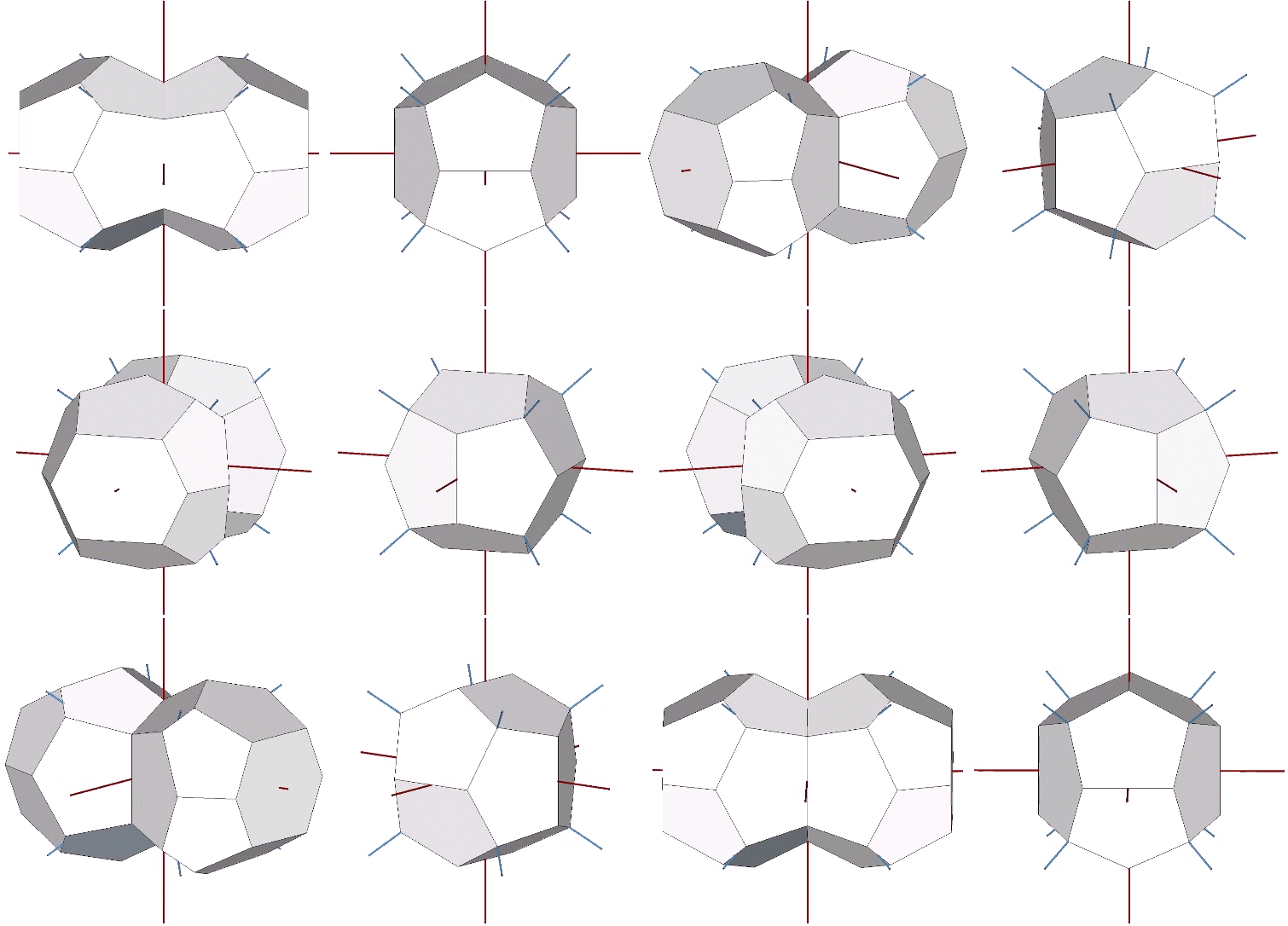
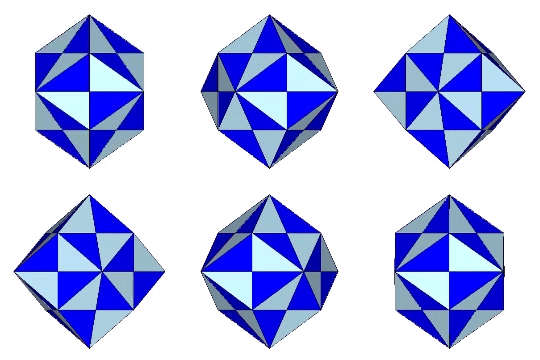
All regular polyhedra, and more, align with the Seven Axes of Symmetry. Top row, left to right: Jitterbug phases; VE; Icosahedron; Rhombic Dodecahedron; Octahedron; Tetrahedron. Bottom row, left to right: Kelvin Truncated Octahedron; Pentagonal Dodecahedron; Icosidodecahedron; Paired Tetrakaidecahedra in the Weaire-Phelan Matrix; Pyritohedron; Cube.
“The tetrakaidecahedron (Lord Kelvin’s “Solid”) is the most nearly spherical of the regular conventional polyhedra; ergo, it provides the most volume for the least surface and the most unobstructed surface for the rollability of least effort into the shallowest nests of closest-packed, most securely self-cohering, allspace- filling, symmetrical, nuclear system agglomerations with the minimum complexity of inherently concentric shell layers around a nuclear center.“ —R. Buckminster Fuller, Synergetics, 942.70
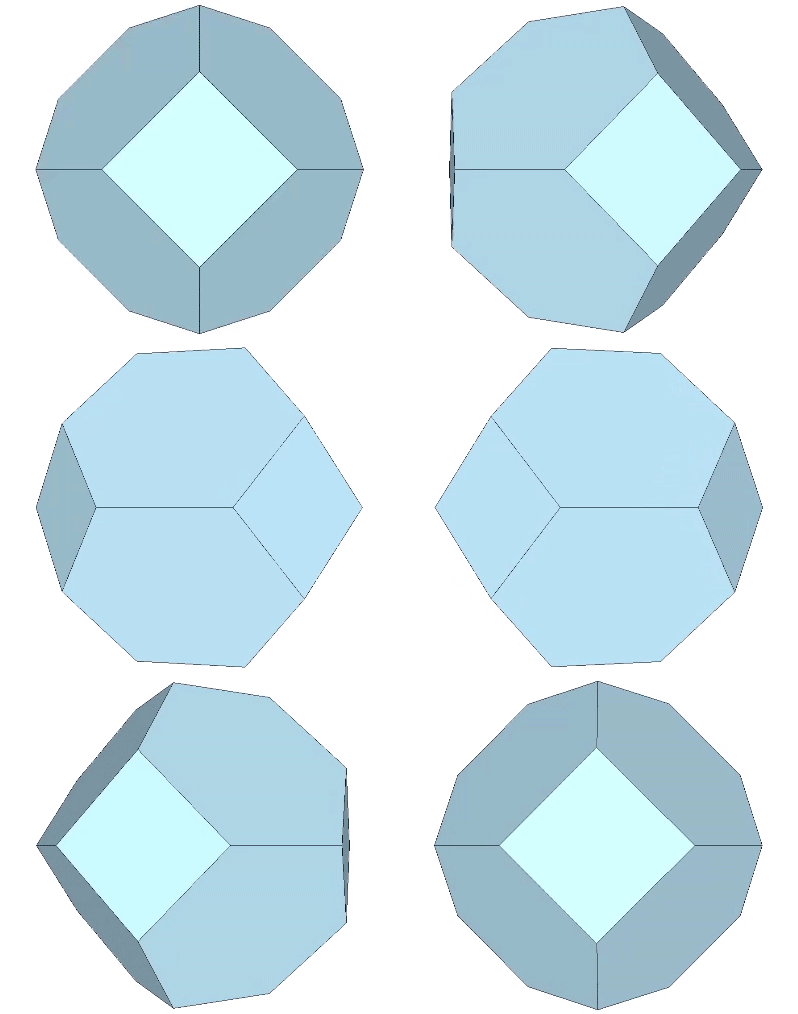
The Kelvin truncated octahedron, or Kelvin, is a space-filling, fourteen-sided polyhedron with eight hexagonal faces and six square faces, all of equal edge-length. It got its name from a problem posed by Lord Kelvin in the 19th century, to find an arrangement of cells of equal volume so that their total surface area is minimized.
The six vertices of the regular octahedron (left) are truncated to create the six square faces of the Kelvin (right).
Note: Fuller refers to this shape as the tetrakaidecahedron, a generic term for all 14-sided polyhedra. I reserve this term for the all-space filling complement to the pyritohedron in the Weire-Phelan matrix. See Tetrakaidecahedron and Pyritohedron.
This truncated octahedron was proposed by Lord Kelvin as the solution to the Kelvin problem: How can space be partitioned into cells of equal volume with the least area of surface between them?
Angles and dimensions of the Kelvin tetrakaidecahedron or truncated octahedron with edge length a:
The fourteen sided Kelvin Structure encloses nuclear domains in the radial close-packing of unit-radius spheres.
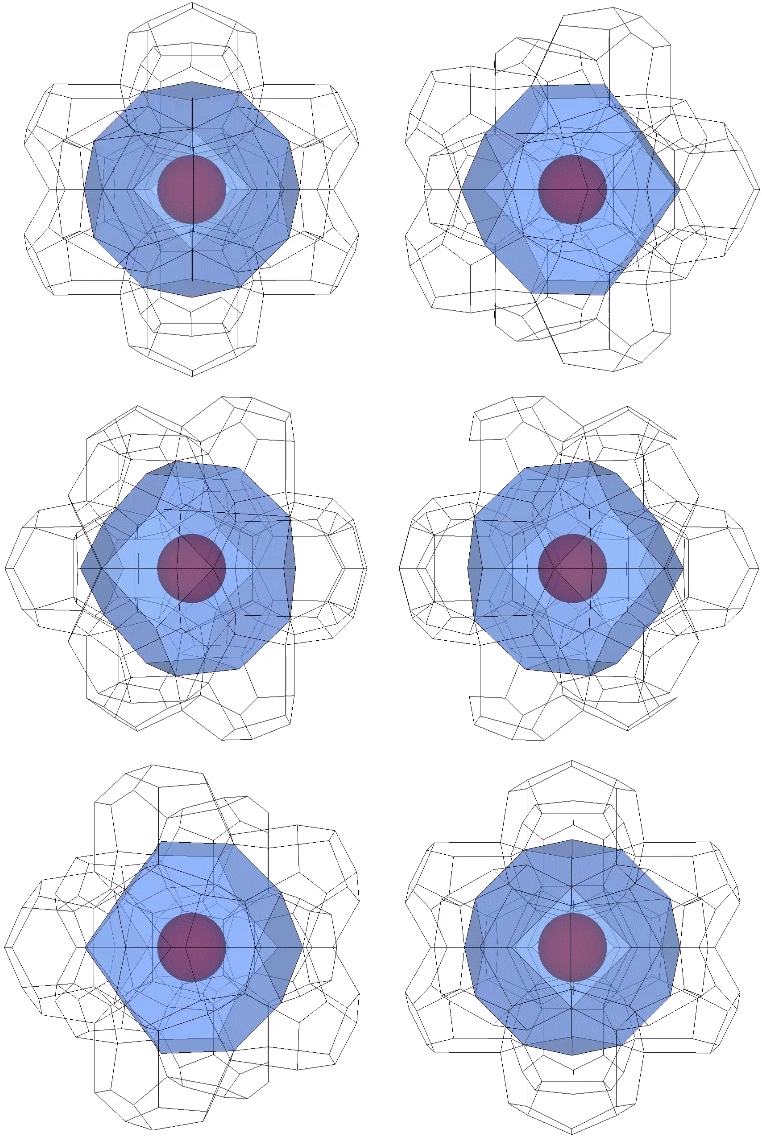
Presently the best solution to the Kelvin problem is the Weaire-Phalen matrix, consisting of pyritohedra and tetrakaidecahedra. Perhaps not surprisingly, the Kelvin can be derived from from this matrix. Connecting radials of the tetrakaidecahedra forms the very same Kelvin as above. Its edges are of unit-length, the same as the spheres’ diameters.
Connecting the radials of the tetrakaidecahedra in the Weaire-Phelan matrix defines the nuclear domain as the Kelvin truncated octahedron
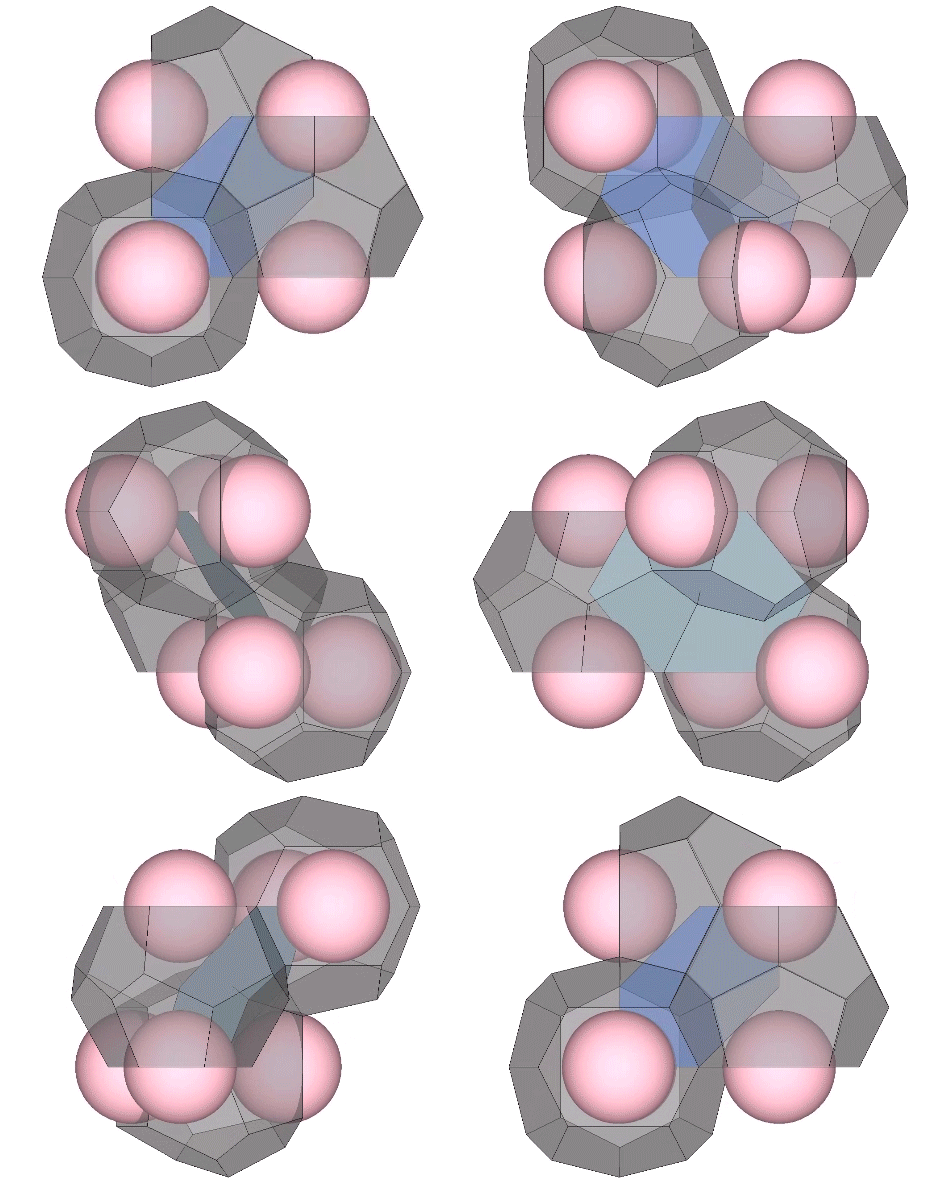
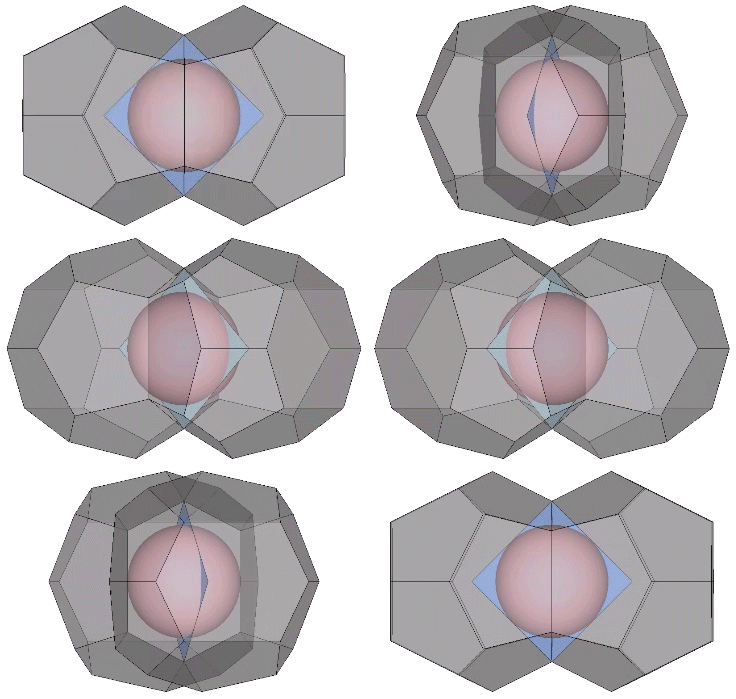
It may be easier to see how the Kelvin faces are derived from the radials of the tetrakaidecahedron if we examine one of its square faces and one of its hexagonal faces individually. The pink spheres in the illustrations below are the non-unique nuclei, those nuclei whose shells are shared with their neighbors. See Formation and Distribution of Nuclei in Radial Close-Packing of Spheres.
Connecting the radials of three adjacent tetrakaidecahedra (face-bonded on their elongated pentagonal faces) describes the hexagonal face of the Kelvin.
Connecting the radials of two adjacent tetrakaidecahedra (face-bonded on their hexagonal faces) describes the square face of the Kelvin.
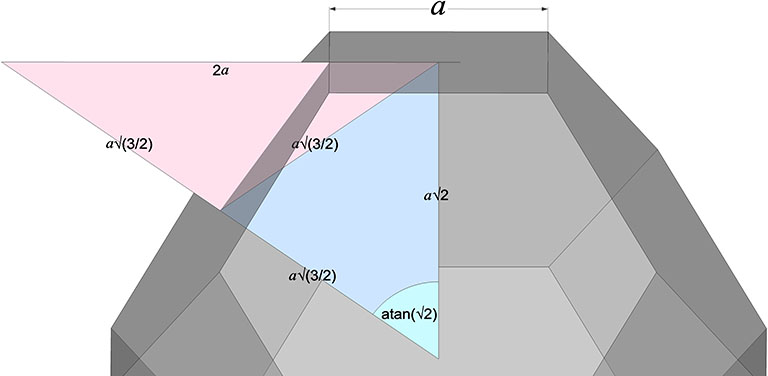
The two in-sphere radii—from center to mid-square-face, and from center mid-hexagonal-face—make an angle of arctan(√2) ≈ 54.735610° with each other. A line drawn between the mid-faces creates an isosceles triangle with a base of a√2 and sides of a√(3/2). Extending the mid-hexagon-face radius to where it crosses a line drawn perpendicular from the mid-square-face radius creates an isosceles triangle with a base of 2a (where a = edge length, unity, or sphere diameter) and sides of a√(3/2). Combining the two isosceles triangles creates a right triangle whose legs measure a√2 and 2a, and whose hypotenuse measures 2×a√(3/2) = a√6.
The two midsphere radii form an isosceles triangle. Extending the mid-hexagon-face to precisely twice its length forms a right triangle with a perpendicular to the mid-square-face radius.
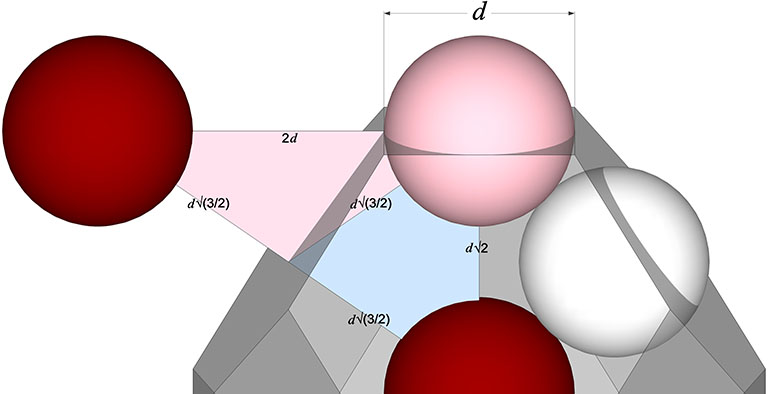
This triangle maps to the distribution of nuclei in the isotropic vector matrix, with unique nuclei centered on the vertices of the two non-right angles, and the nuclei that share their shells with adjacent nuclei centered on the right angle’s vertex.
Note that in the illustrations below, d = a = the sphere diameter. Unique nuclei are colored red, non-unique nuclei are pink, and the spheres occupying the shells of nuclei are white.
The corners of the right triangle formed from the midsphere radii coincide with the centers of nuclei in the isotropic vector matrix.
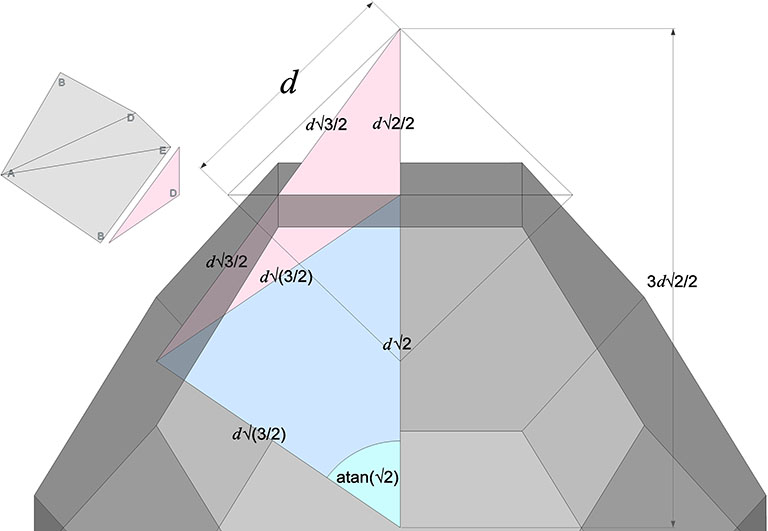
Extending the mid-square-face radius to a point where it crosses a line drawn perpendicular to the mid-hexagon-face radius creates a scalene triangle whose angles are curiously identical with the interior face of the B quanta module. Combining this scalene triangle with the isosceles triangle mentioned above creates a right triangle whose legs measure 2d√2/2 and d√(3/2). The mid-square-face radius extends d√2/2 beyond the face, exactly half of the face’s diagonal length, and half the mid-square-face radius. This suggests a rotational transformation of the Kelvin that may shadow the space-to-sphere, sphere-to-space transformations of the isotropic vector matrix, something begging to be investigated further, along with that curious appearance of the interior face of the B quanta module (pink in the illustration below).
Extending the mid-square-face radius to a point where it crosses the perpendicular to the mid-hexagon-face radius forms a scalene triangle exactly proportional to the interior face of the B quanta module (inset upper left).
If we replace the twelve vertices of a one-frequency Kelvin with spheres, we find that they occupy the spaces between the 42 spheres of the two 2-frequency vector equilibrium (VE) shell. The 2-frequency VE is significant because its shell is the last to fully enclose the nucleus without containing any new potential nuclei. The 1-frequency Kelvin complements the 2-frequency VE to fully isolate unique nuclear domains.
The one-frequency Kelvin occupies the spaces between the spheres of the two-frequency VE and fully isolates the nucleus.
Kelvins with even frequencies (odd numbers of spheres to the side) are coincident with the radially close-packed spheres of the isotropic vector matrix. Those with odd frequencies (even numbers of spheres to the side) occupy the spaces between radially close-packed spheres.
Kelvins of even frequencies (white spheres) are coincident with the spheres of the isotropic vector matrix. Kelvins of odd frequencies (gray spheres) occupy the spaces between them.
At the center of odd Kelvins is a space, i.e., concave VE, and at the center of even Kelvins is a sphere. Note that the odd Kelvins in the above examples which fully isolate the nucleus have been shifted by 1/2 of a sphere diameter out of their natural position in the matrix. (See also: Spaces and Spheres (Redux), and; Spheres and Spaces.)
Fuller used the Kelvin to illustrate his seven axes of symmetry which he derived from the truncations of the tetrahedron’s four vertices and six edges.
Fuller’s conception of the Kelvin as a truncated tetrahedron, rather than a truncated octahedron, is perhaps due to its association with the spherical form of the tensegrity tetrahedron, the six-strut tensegrity sphere or Jessen Orthogonal Icosahedron.
The six-strut tensegrity sphere (middle) is constructed by joining two-each vertices from opposing square faces of the Kelvin (left). The Jessen orthogonal icosahedron (right) describes its polyhedral shape.
“The geometrical model of energy configurations in synergetics is developed from a symmetrical cluster of spheres, in which each sphere is a model of a field of energy all of whose forces tend to coordinate themselves, shuntingly or pulsatively, and only momentarily in positive or negative asymmetrical patterns relative to, but never congruent with, the eternality of the vector equilibrium. “ — R. Buckminster Fuller, Synergetics, section 205.01
Vectors connecting the centers of unit-radius spheres clustered around a common nucleus define the VE, or vector equilibrium.
The vectors connecting the centers of unit-radius spheres clustered around a common nucleus define the vector equilibrium (“VE”).
In the VE, the number of modular subdivisions, i.e. frequency, of the radii is exactly the same as the number of modular subdivisions of the chords. Frequency may refer, then, to the number of shells surrounding the nucleus or to the number of subdivisions of any edge vector.
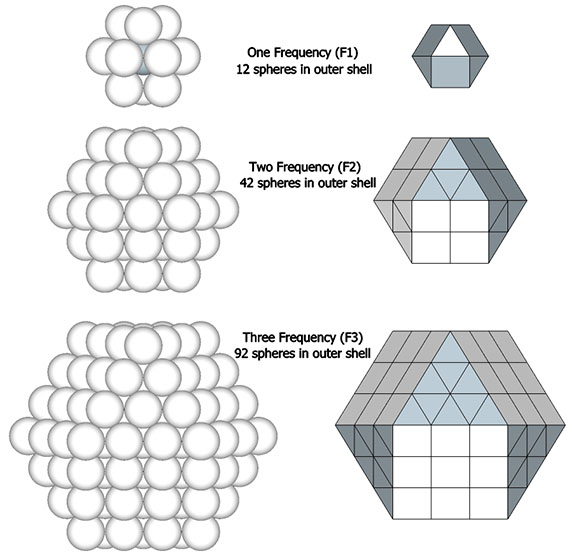
The radial close packing of equal radius spheres about a nuclear sphere forms vector equilibria of progressively higher frequencies. The number of spheres in the outer shell is always the frequency (F)—the number of subdivisions of the radial or edge vectors running through the sphere centers—raised to the second power, which is then multiplied by ten, then added to two, or 10F²+2. In the illustration below, the F1 VE (with unit radial and edge vectors) has twelve spheres in its outer shell: (10×1)+2=12. The F2 VE (whose radial and edge vectors have been divided into two subdivisions) has 42 spheres in its outer shell: (10×2²)+2=42. The F3 VE (with three subdivisions) has 92 spheres in its outer shell: (10×3²)+2=92.
Shell Volume (in spheres or vertices) of VE = 10F²+2
Equal radius spheres close-pack as a matrix of vector equilibria of progressively higher frequencies. The number of vertices or spheres in any layer is given by the formula 10F²+2.
The cumulative number of spheres in a radially close-packed array is therefore:
10(F12+F22+F32+ … +Fn2)+2Fn+1,
which integrates to:
(20F3+30F2+22F+6)/6
The polyhedral shape of these nuclear assemblages of closest-packed spheres is always that of the vector equilibrium, having always six square, and eight triangular faces, for a total of fourteen. The square faces are the equatorial sections of six half-octahedra, and the triangular faces are the bases of eight tetrahedra. If the tetrahedron is taken as unity, the volume of the vector equilibrium is twenty (20). The volume in tetrahedra of any series of vector equilibria of progressively higher frequencies is always frequency to the third power times 20.
Volume (in tetrahedra) of VE = 20F³
The VE is the only construction of radially close-packed spheres that produces uniform and uninterrupted layers. Radial close-packing as octahedra is achieved only with even-numbered layers (odd numbered layers are centered on spaces), and radial close packing as tetrahedra and cubes is achieved only with every other even layer (odd numbered layers are centered on either a positive or a negative tetrahedron, and every other even layer is centered on a space).
In A and B quanta modules, the VE of frequency, F, equal to 1 consists of 336 A quanta modules and 144 B quanta modules for a total of 480 quanta, a volume of 480÷24=20 tetrahedra.
The quanta module model of the F1 vector equilibrium constructed of eight tetrahedra, with 24 A quanta modules each, and six half octahedra, with 24 A and 24 B quanta module each, for a total volume of 480 quanta modules.
The polyhedron associated with the external shape of the VE is conventionally recognized as the cuboctahedron, or the truncated cube. That its edge lengths are identical to the length of its circumsphere radii was perhaps less well known, and its association with the radial close-packing of unit-radius spheres was either unknown or dismissed by mathematicians as of peripheral interest. For Fuller, these characteristics were central to his search for the geometric analog to his more general statement of Avogadro’s proposition, that under under identical, unconstrained, and freely self-interarranging conditions of energy all elements will disclose the same number of fundamental somethings per given volume. This was discovered to be his octet truss, or isotropic vector matrix, and the vector equilibrium (VE) is its metonymous form.
The question of structure, too, has historically been peripheral to the study of pure geometry; the subject was left to the engineers, and the engineers had for millennia been mostly stone masons for whom one geometric shape was as solid as the next. Fuller’s octet truss and geodesic structures were unknown until the “space age” of the mid-twentieth century. In the absence of its radial vectors, the remaining circumferential (edge) vectors of the cuboctahedron are left unsupported and will collapse, just as the vector model of the cube it was based on will collapse without additional triangulation. Neither is structural, if by “structure” we mean something that holds its shape without external support. In the absence of gravity and the solid earth beneath them, few man-made structures fit this definition.
A third point of contention that Fuller had with conventional geometry was its attention to linear growth and parallel lines, which he attributed to our flawed notion of a flat earth that extended to infinity, and a single direction for “up,” the equal and opposite direction of our “down-to-earth” sensibilities. Nature, if unconstrained, prefers radial (outward-inward) growth with circumferential constraints.
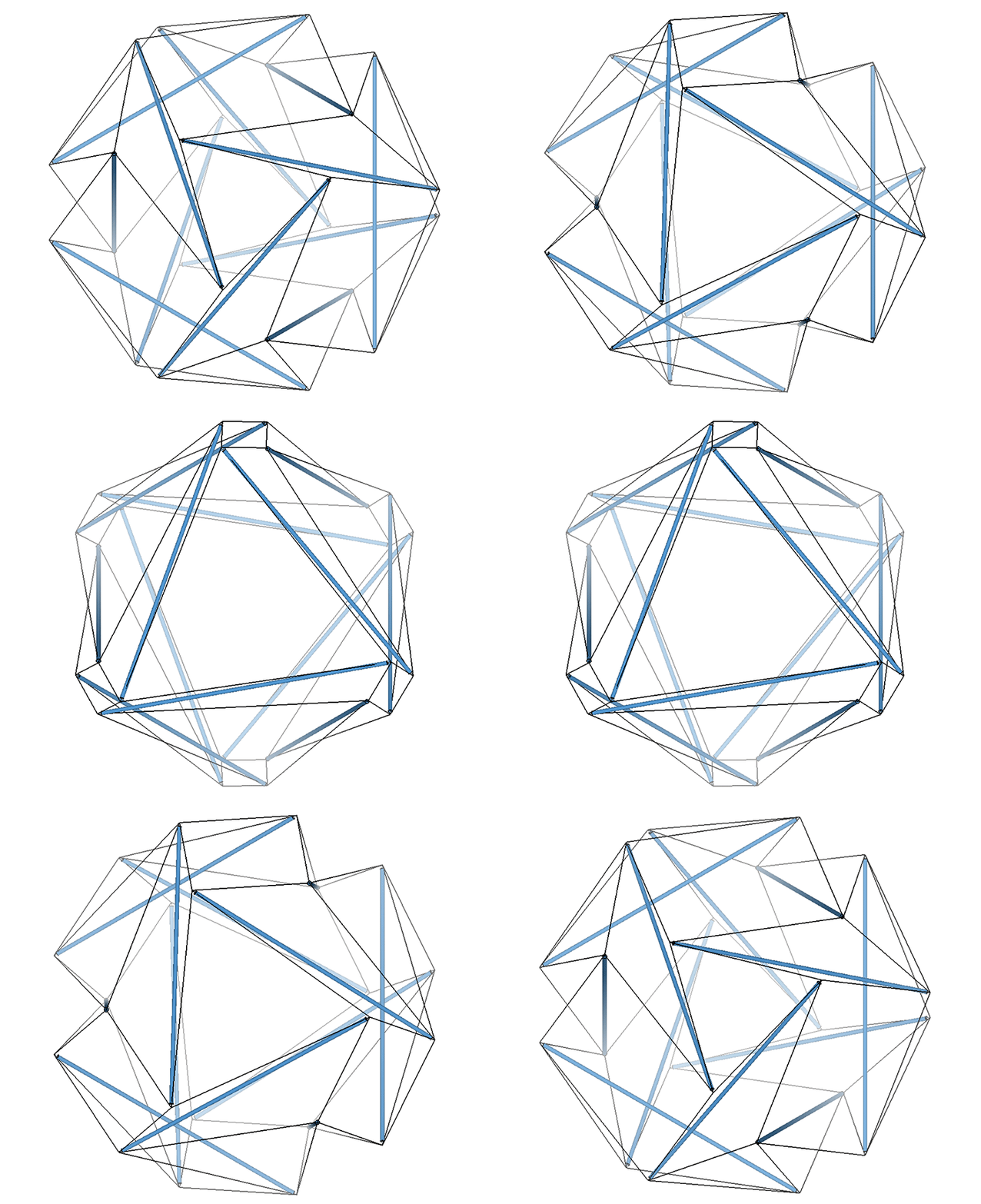
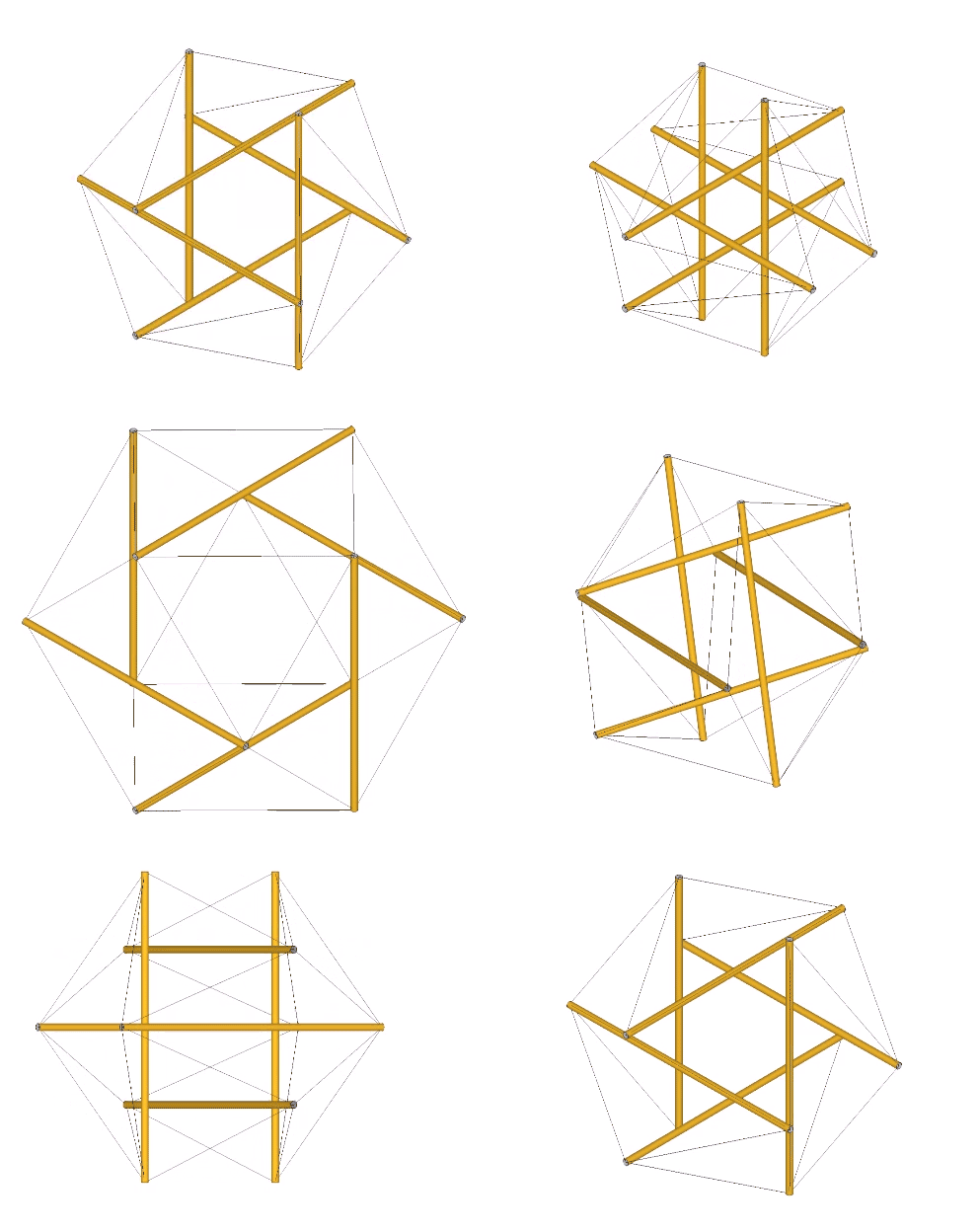
The 12-strut tensegrity sphere approximates the overall shape of the VE, and perfectly models what Fuller meant by this. Like all his tensegrities, its structural integrity is maintained by a balance between the radial compression of its struts, and the circumferential tension of its tendons. The twelve-strut tensegrity sphere will torque naturally into the tensegrity octahedron, a transformation recapitulated in the vector model of the jitterbug.
The 12-strut tensegrity sphere approximates the shape of the VE and torques naturally into the tensegrity octahedron.
The VE consists of four great circles, i.e., four 3-strut triangles in the twelve-strut tensegrity sphere, or four hexagons in the vector model.
The VE consists of four great circles with axes running through its triangular faces. The 12-strut tensegrity sphere (right) approximates the shape of the VE with each great circle defined by three-strut triangles.
It is likely no coincidence that the surface area of the sphere is equal to the combined surface areas of the VE’s four great-circle disks. The two sides of each disk account for both the convex external surface of the sphere and its concave internal surface. (See: Anatomy of a Sphere.) In the bow-tie construction of the VE, produced by folding the great circle disks along the VE’s central 60° angles, both surfaces are exposed, one inside the square faces, the convex, energy-dispersing surface, and the other inside the triangular faces, the concave, energy-focusing surface. This interpretation of the bow-tie model is strengthened by the quanta model in which the square faces expose the energy-dissipating B modules, and the triangular faces expose the energy-conserving A modules. (See: A and B Quanta Modules.)
Bow-tie construction of the VE, made from the four great circle disks of VE’s 4 triangular-face-to-face axes of spin.
The Seven Axes of Symmetry common to all the regular polyhedra correspond to the 4 axes of spin running through the VE’s eight triangular faces, plus the 3 axes running through its six square faces, the former disclosing spherical VE and its four great circles, and the latter disclosing the spherical octahedron and its three great circles.
The Seven Axes of Symmetry correspond to the VE’s 4 triangular and 3 square face-to-face axes of spin, whose great circles disclose the spherical VE and the spherical octahedron.
Transformations of the VE disclose the regular icosahedron, the Jessen icosahedron (or six-strut tensegrity sphere), the regular octahedron, and the regular tetrahedron. The transformation to the regular icosahedron is perhaps best modeled in the radial close packing of spheres. With the removal of the central sphere, the twelve remaining spheres naturally reposition themselves into the shape of the icosahedron.
With the central sphere removed, the remaining twelve spheres of the VE’s shell rearrange themselves into an icosahedron.
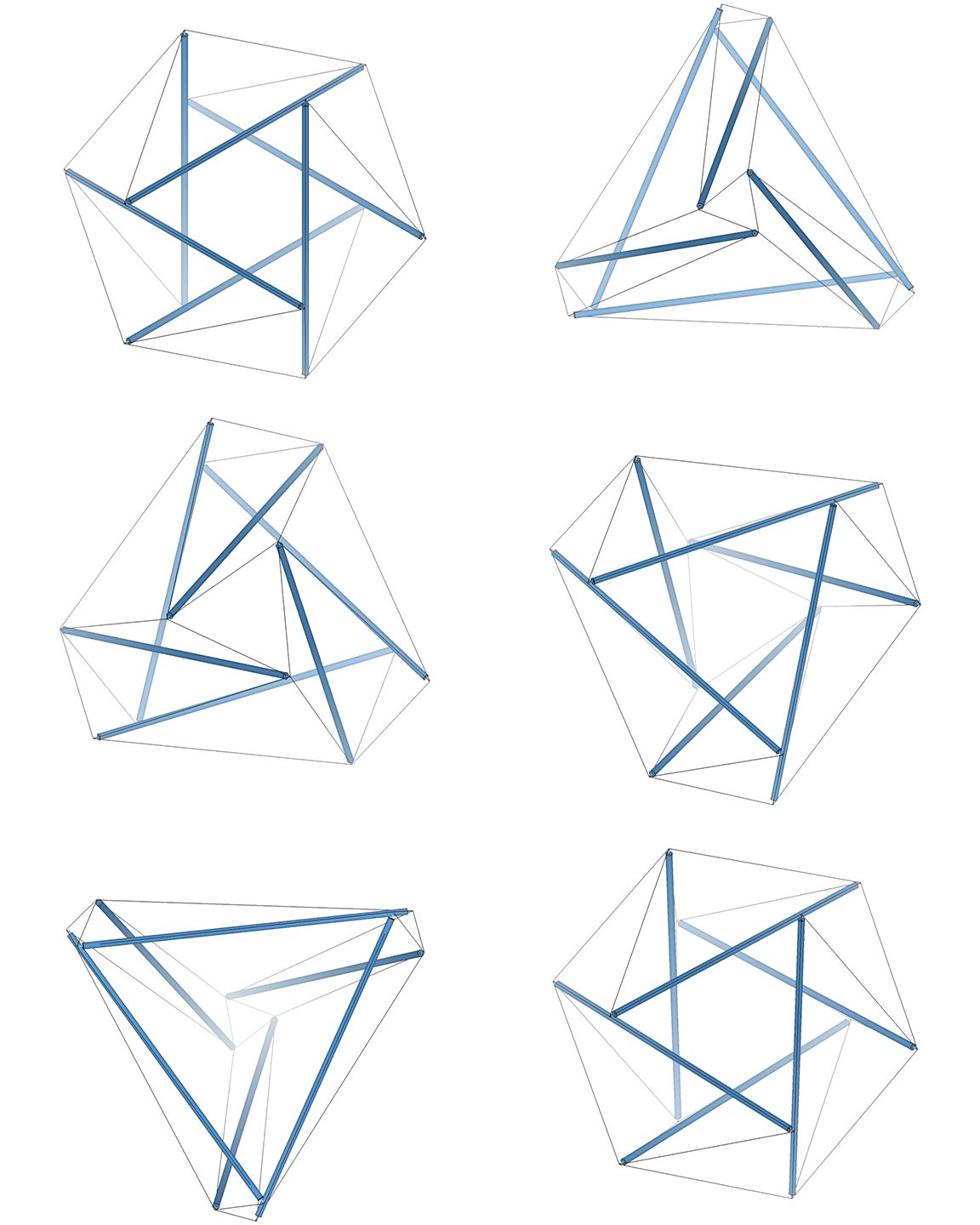
The transformation to the Jessen orthogonal icosahedron is perhaps best modeled in the jitterbugging of the six-strut tensegrity, or tensegrity tetrahedron which, in its most relaxed, spherical, or equilibrium state is identical with the Jessen icosahedron.
The Jessen Orthogonal Icosahedron is identical with the 6-strut tensegrity sphere, and occurs at the precisely midway between the VE and octahedron phases of the jitterbug transformation.
The transformation to the regular octahedron is disclosed through torquing of the 12-strut tensegrity (see above), but is perhaps most convincingly modeled in the jitterbug transformation by the coordinated rotations of its eight triangular faces.
The conventional model of the jitterbug, with the VE transforming into the octahedron and vice versa.
The transformation of the VE into the regular tetrahedron can be accomplished in the vector model by adding a 180° twist to the downward motion of the jitterbug.
Adding a 180° twist to the jitterbug bypasses the octahedron phase and results in the transformation of the VE into the tetrahedron.
But the transformation of the VE into a tetrahedron is perhaps best modeled in the six-strut tensegrity sphere (aka Jessen icosahedron) which occurs at the precise midpoint of the jitterbug transformation. (See: Icosahedron Phases of the Jitterbug.) From here, the VE may continue its transformation into the octahedron, or it can be torqued into the shape of a regular tetrahedron. A clockwise or counter-clockwise torque will produce either a positive or a negative tetrahedron. (See: The Dual Nature of the Tetrahedron.)
The six-strut tensegrity sphere can be torqued either clockwise or count-clockwise to produce the positive or the negative tetrahedron.
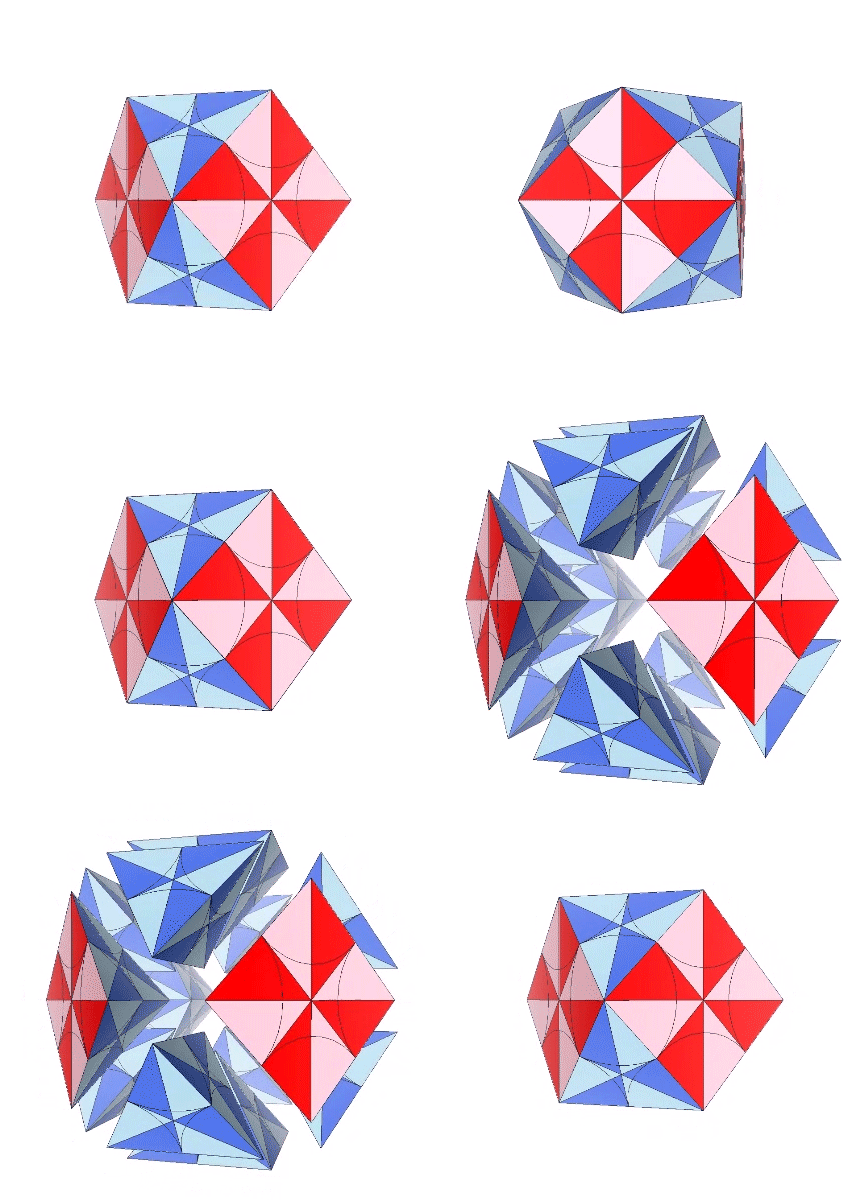
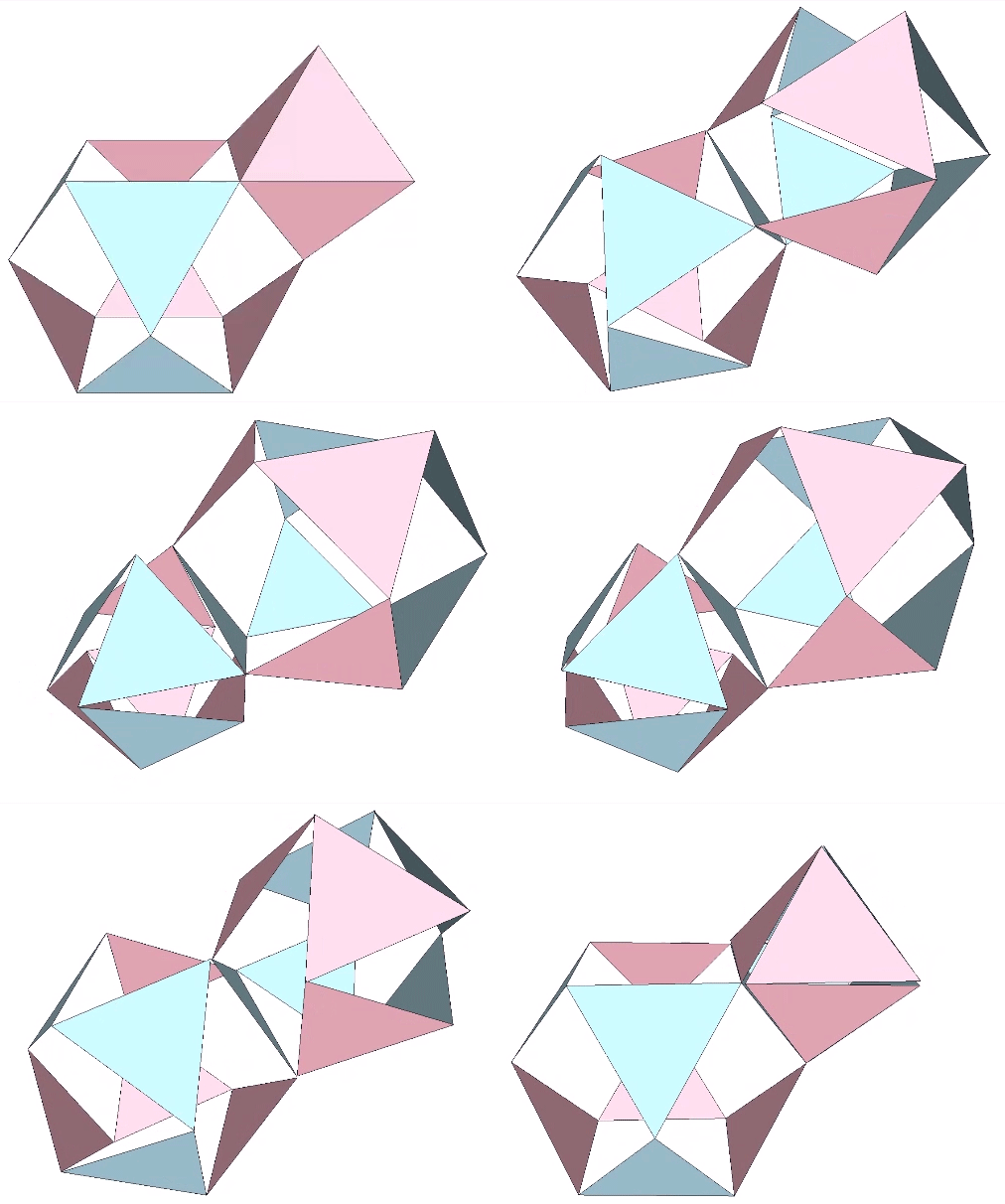
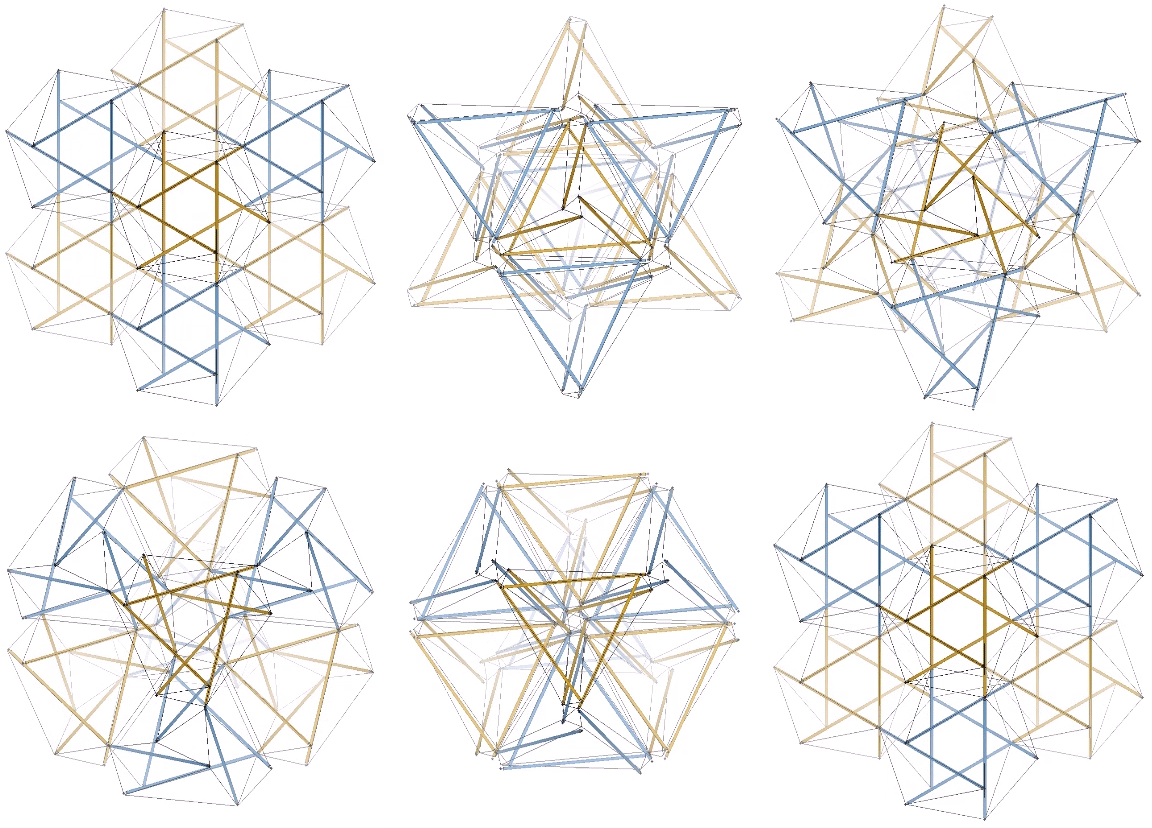
For me, the most compelling model of the jitterbug transformation, which Fuller identified with wave-particle duality, the equivalence of mass and energy, the balance of disintegrative, radiational forces (compression) with integrative, gravitational forces (tension), and which he intuited as a generative metaphor for nearly everything in the physical sciences, if not for everything that is thinkable, is the following: eight, six-strut tensegrity spheres surrounding a common center, and transforming between positive and negative tetrahedra.
This model is illustrated below, with four of the eight, six-strut tensegrity spheres torquing clockwise to form the positive tetrahedron, and the other four torquing counter-clockwise to form the negative tetrahedron, which then switch roles to reverse the process. The result is an oscillation between the VE, with the eight tetrahedra all sharing a common vertex at its center, and the octahedron, with the eight tetrahedra projecting from its eight faces. In the context of the isotropic vector matrix, all the vertices of all the tetrahedra always converge on the center of a VE, but these convergences shift by one-half wavelength with each cycle, exchanging the nuclear spheres (vertex convergences) at the centers of the VEs, with the nuclear space at the centers of the octahedra. (See also: Spheres and Spaces.)
Eight six-strut tensegrity spheres transforming between positive and negative tetrahedra is perhaps the most accurate model of Fuller’s “Jitterbug Transformation.”
“The tetrakaidecahedron develops from a progression of closest-sphere-packing symmetric morphations at the exact maximum limit of one nuclear sphere center’s unique influence, just before another nuclear center develops an equal magnitude inventory of originally unique local behaviors to that of the earliest nuclear agglomeration.“ — R. Buckminster Fuller, Synergetics, section 942.71
The tetrakaidecahedron that Buckminster Fuller had in mind, and which he refers to as “Lord Kelvin’s Solid” was the truncated octahedron, a polyhedron which, like the vector equilibrium (VE), has fourteen sides, and which at the time (1975) was considered the tentative solution to the Kelvin Problem: How can space be partitioned into cells of equal volume with the least area of surface between them? Fuller, like most others, assumed that a bitruncated cubic honeycomb consisting of truncated octahedron cells was, with only slight deformation, the most likely solution. Ten years after Fuller’s death, in 1993, Denis Weaire of Trinity College Dublin and his student Robert Phelan showed through computer simulations of foam that a combination of pyritohedra and tetrakaidecahedra of equal volume could fill space more efficiently, with a surface area to volume ratio 0.3% less that that of Kelvin’s truncated octahedra.
There is a curious correlation between the close packing of unit-radius spheres and foams of unit-volume cells. Spheres close pack around a central sphere as vector equilibria of increasing frequency. The polyhedral domain of each sphere is a rhombic dodecahedron. Rhombic dodecahedra close pack exactly as spheres close pack, twelve around one. (See The Rhombic Dodecahedron.) If we partition close-packed spheres into nuclear domains of central spheres surrounded by unique 12-sphere shells, the shells are distributed as Kelvin’s tetrakaidecahedra, but the nuclei themselves are distributed exactly as the pyritohedra are distributed in the Weaire-Phelan matrix. See: Formation of New Nuclei in Close-Packing of Spheres.
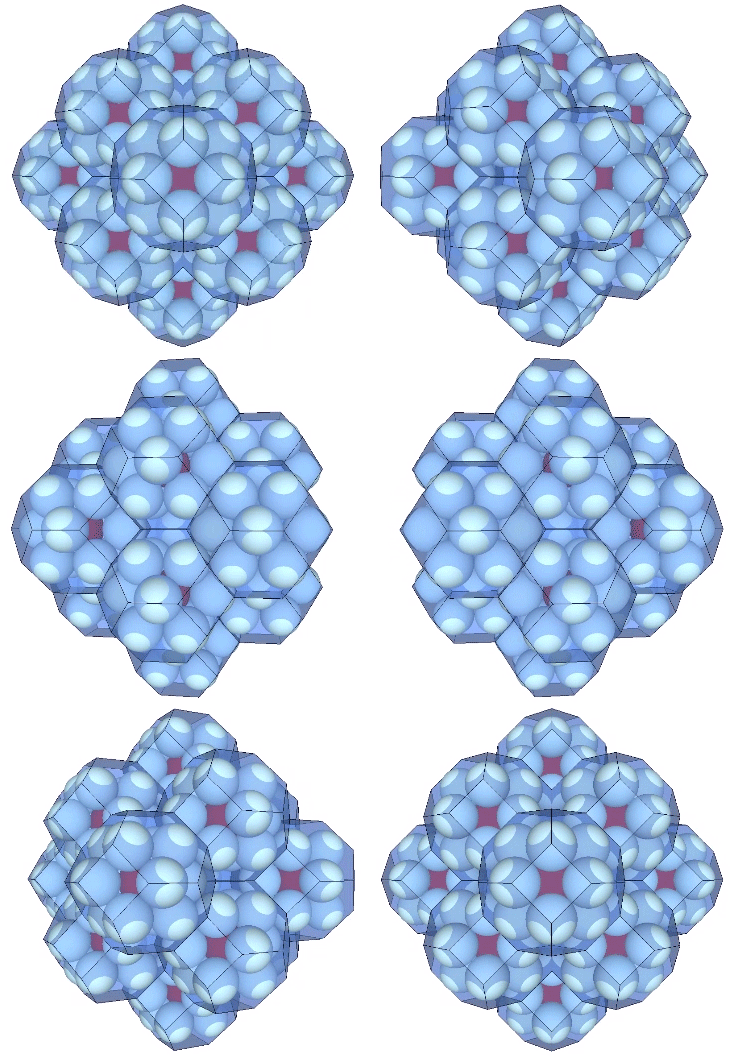
Both the bitruncated cubic honeycomb consisting of truncated octahedra, and the Weaire-Phelan matrix consisting of pyritohedra and tetrakaidecahedra, isolate unique nuclei in the close-packed spheres of the isotropic vector matrix. In the figure below, the isolated nuclei are shown as red spheres, and those that share their shells with neighboring nuclei are shown as pink spheres. In the top row, the vector equilibria of the isotropic vector matrix surround both the red and pink nuclei; they do not distinguish unique nuclei. The truncated octahedra in the middle row do distinguish unique nuclei if their edge length is equal to the sphere diameter, with every other nuclear domain sharing a common center with a truncated octahedron. The Weaire-Phelan matrix (bottom row) distinguishes unique nuclei by their own polyhedron, the pyritohedron, while those that share their shells with neighboring nuclei are centered between positive and negative tetrakaidecahedra. The tetrakaidecahedra are sized so that their circumsphere radius is equal the the sphere diameter.
In the isotropic vector matrix (top row), all nuclear spheres are enclosed within VE’s, whether or not their shells are shared with neighboring spheres. Kelvin truncated octahedra (middle row) distinguish between unique nuclei (red) and those sharing their shells with neighboring nuclei (pink). The Weaire-Phelan matrix (bottom row) distinguishes unique nuclei as those sharing a common center with the pyritohedra.
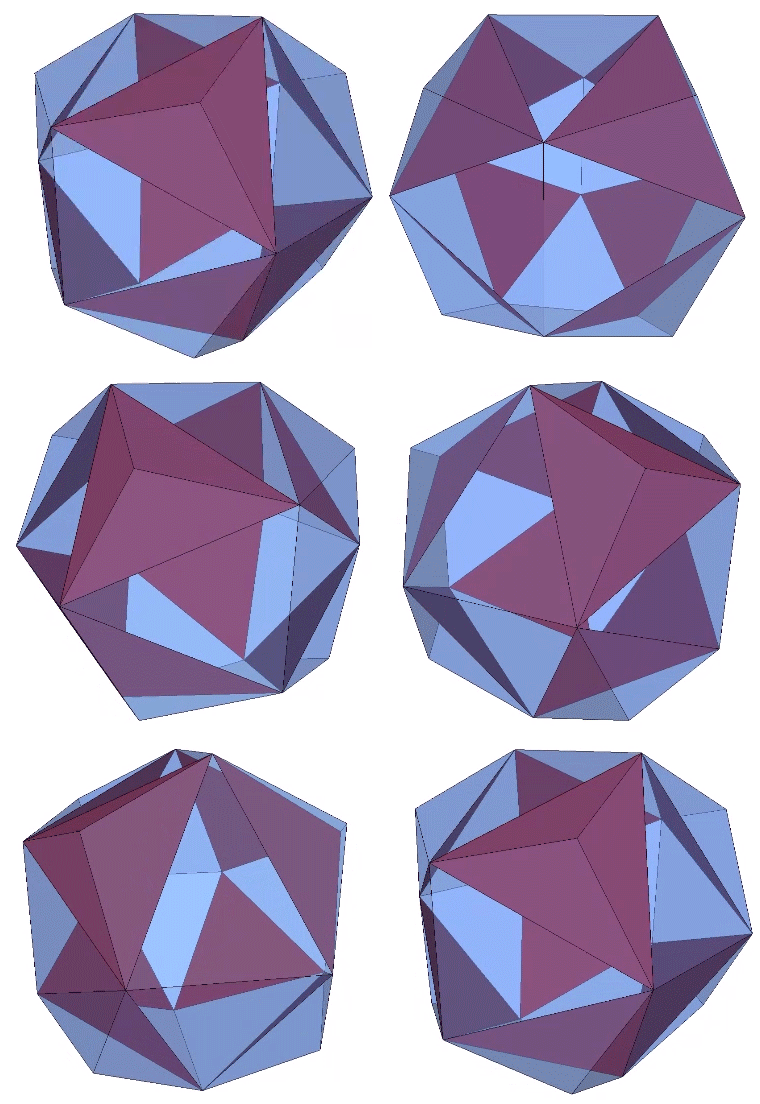
The pyritohedron is familiar as its namesake, the pyrite crystal, or “fool’s gold,” which like the regular dodecahedron has twelve identical faces. The pentagonal faces of the pyritohedron are irregular, with one edge slightly longer that the other four. The pyritohedron can be derived from the Jessen Orthogonal Icosahedron, more familiar in Fuller’s geometry as the convex shape of the six-strut tensegrity sphere. The correlation is intriguing. See also: Tensegrity, and Icosahedron Phases of the Jitterbug.
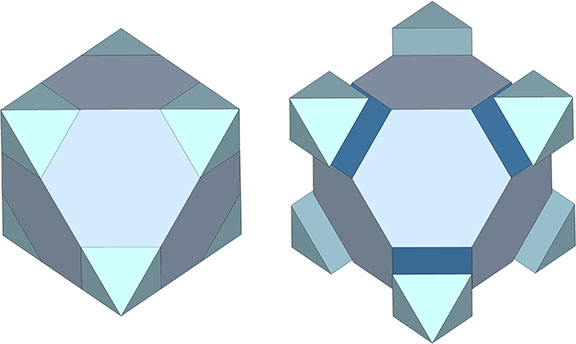
The pyritohedron (clear blue) can be derived from the Jessen Orthogonal Icosahedron (red), the polyhedral shape of the six-strut tensegrity sphere.
The pyritohedron can be constructed by the addition of eight shallow tetrahedra to each of the eight equilateral triangles of the Jessen icosahedron. The height of these tetrahedra is exactly 1/3 the in-sphere radius of the Jessen icosahedron, or one quarter the circumsphere radius of the pyritohedron.
Adding eight shallow tetrahedra to the equilateral triangles of the Jessen Icosahedron (the polyhedral domain of the six-strut tensegrity sphere) forms the pyritohedron. The height of the tetrahedra is 1/3 the in-sphere radius of the Jessen Icosahedron, or 1/4 the circumsphere radius of the pyritohedron.
An even more beautiful symmetry, I think, is disclosed by connecting the peaks of the eight shallow tetrahedra to form a cube.
Connecting the peaks of the eight shallow tetrahedra forms a cube disclosing rational symmetry with both the pyritohedon and the Jessen icosahedron.
The tetrakaidecahedron that combines with the pyritohedron to fill all space is a 14-sided polyhedron consisting of two elongated hexagonal faces and two sets of pentagonal faces: four matching the faces of the pyritohedron, and eight elongated pentagons.
Lines drawn from the base to peak of the eight elongated pentagon faces, and from the line’s endpoints to the center of the tetrakaidecahedron, form equilateral triangles whose edge lengths in the Weaire-Phelan matrix correspond to the diameter of the nuclear spheres isolated by the pyritohedra.
Lines drawn from the base to the peak of the eight elongated pentagon faces of the tetrakaidechedron (clear blue), and from the line’s endpoints the center, form equilateral triangles whose edge lengths in the Weaire-Phelan matrix correspond to the diameter of the nuclear spheres isolated by the pyritohedra (clear gray).
The appearance of eight equilateral triangles in both the pyritohedron and the tetrakaidecahedron suggests the possibility of a jitterbug-like transformation from one to the other. Their edge lengths, however, differ. The edge length of the eight equilateral triangles in the pyritohedron is approximately 1.091135 times the edge length of those in the tetrakaidecahedron.
Both the tetrakaidecahedron (left) and the pyritohedron (right) disclose eight equilateral triangles, suggesting the possibility of jitterbug-like transformation whereby one transforms into the other. Their respective lengths, however, differ by a factor of 1.091135.
Connecting the unit-length radials of adjacent tetrakaidecahedra forms shells around the nuclei in the shape of Kelvin’s truncated octahedron.
Wireframe the Weaire-Phelan matrix, with 14 tetrakaidecahedra surrounding a pyritohedron and nucleus. Connecting the unit-length radials of adjacent tetrakaidecahedra forms a Kelvin shell around the nucleus.
If we align the unit vectors of the Weaire-Phelan matrix with the isotropic vector matrix, the pyritohedra enclose spaces rather than spheres. If we align them with the distribution of nuclei, the Weaire-Phelan matrix is 180° out of phase with the isotropic vector matrix. This phase difference suggests an energetic relationship between the two matrices that may provide insight into the jitterbug transformation, and its oscillations between spheres and spaces.
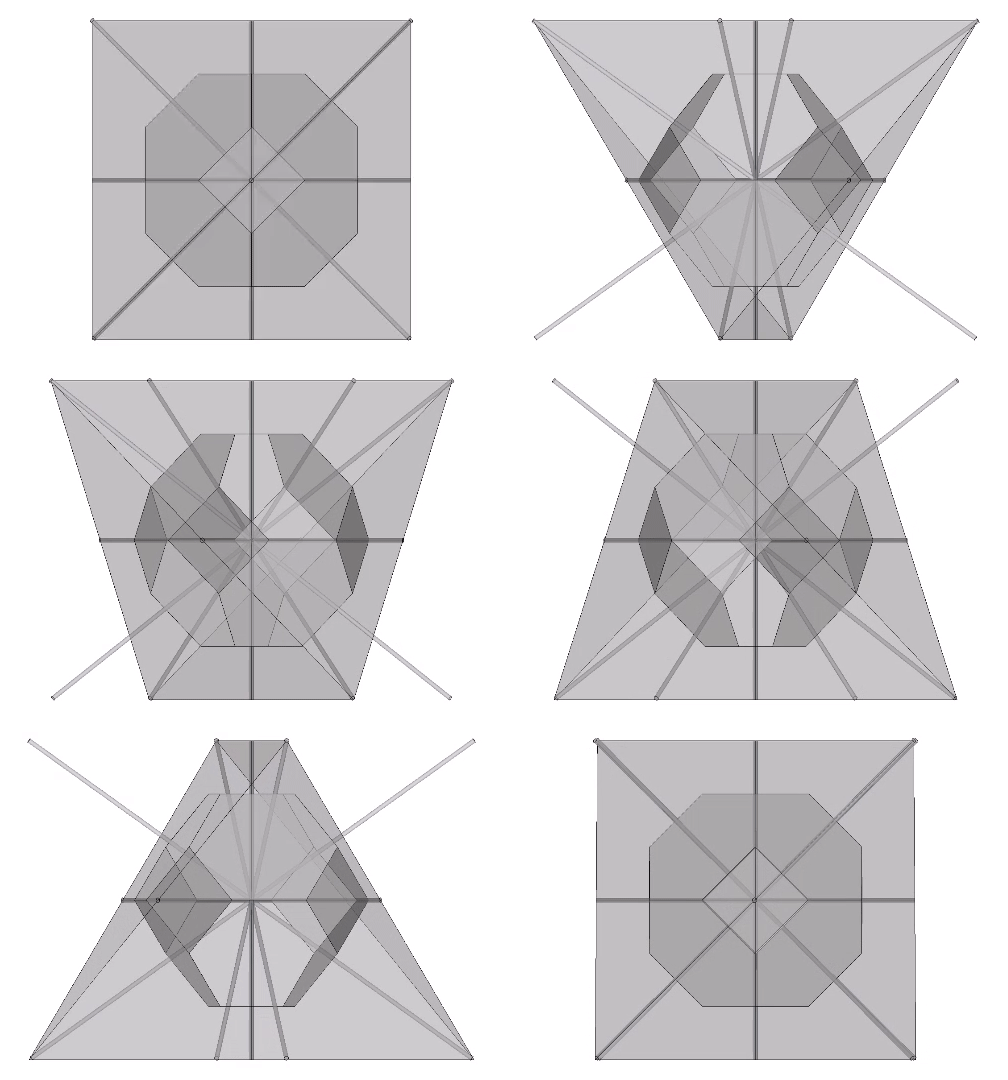
The pyritohedron, and the tetrakaidecahedra paired with its mirror image, both align with the The Seven Axes of Symmetry.
Paired tetrakaidecahedra (left) and pyritohedron (right) aligned to the seven axes of symmetry.
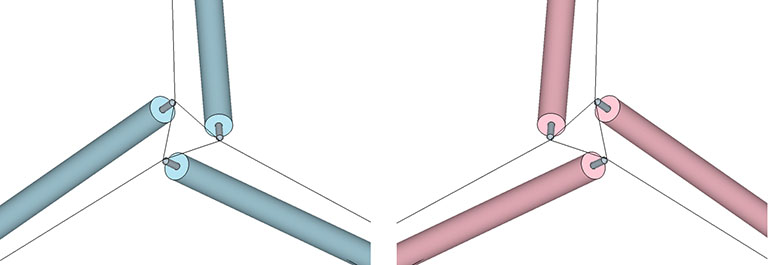
All polyhedra are either left- or right-handed and, with the exception of the tetrahedron, there is no transformation that can be modeled by which one becomes the other. The handedness of a polyhedron is not readily apparent when viewed as a solid or as a vector model with single-point vertices. However, when modeled structurally as tensegrities their handedness becomes obvious.
The handedness (right-left, clockwise-counterclockwise, positive-negative) of the tetrahedron becomes obvious when represented structurally as a tensegrity. The struts come together at the vertices in either a clockwise or counterclockwise orientation, but never both in the same tetrahedron.
The tetrahedron is uniquely ambidextrous. From its relaxed state as the six-strut tensegrity sphere, it is both itself and its inverse. The transformation can go either way, producing either a positive or a negative tetrahedron. All configurations between the spherical and polyhedron phases are structurally stable, but once the choice is made to transform either in a clockwise or counterclockwise direction the ambiguity collapses into into either a positive or a negative tetrahedron. To transform back to its inverse, the tetrahedron must first pass through its spherical phase. For more information, see Tensegrity.
The tetrahedron is uniquely ambidextrous. From its relaxed state as the six-strut tensegrity sphere, it can transform in either a clockwise or counterclockwise direction to produce either a positive or a negative tetrahedron.
The Jitterbug is an oscillation between positive and negative (left-handed and right-handed, clockwise and counter-clockwise) tetrahedra.
The jitterbug as the oscillation between positive and negative tetrahedra
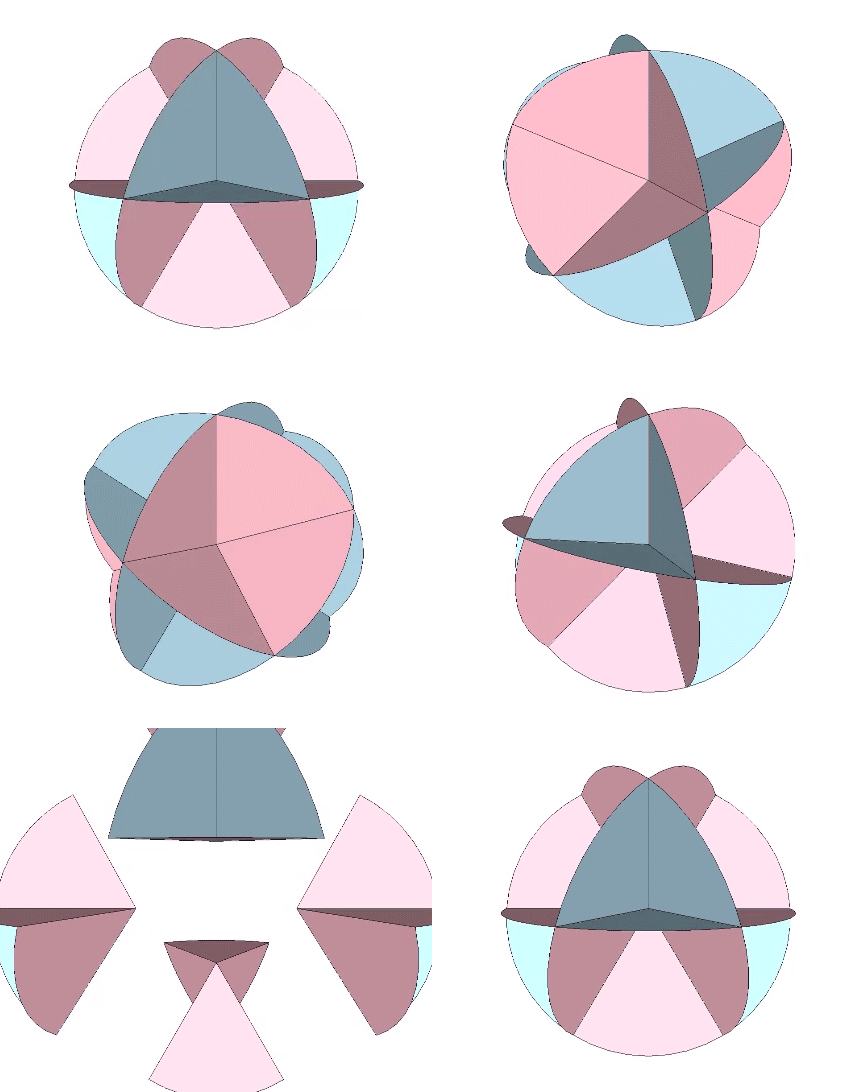
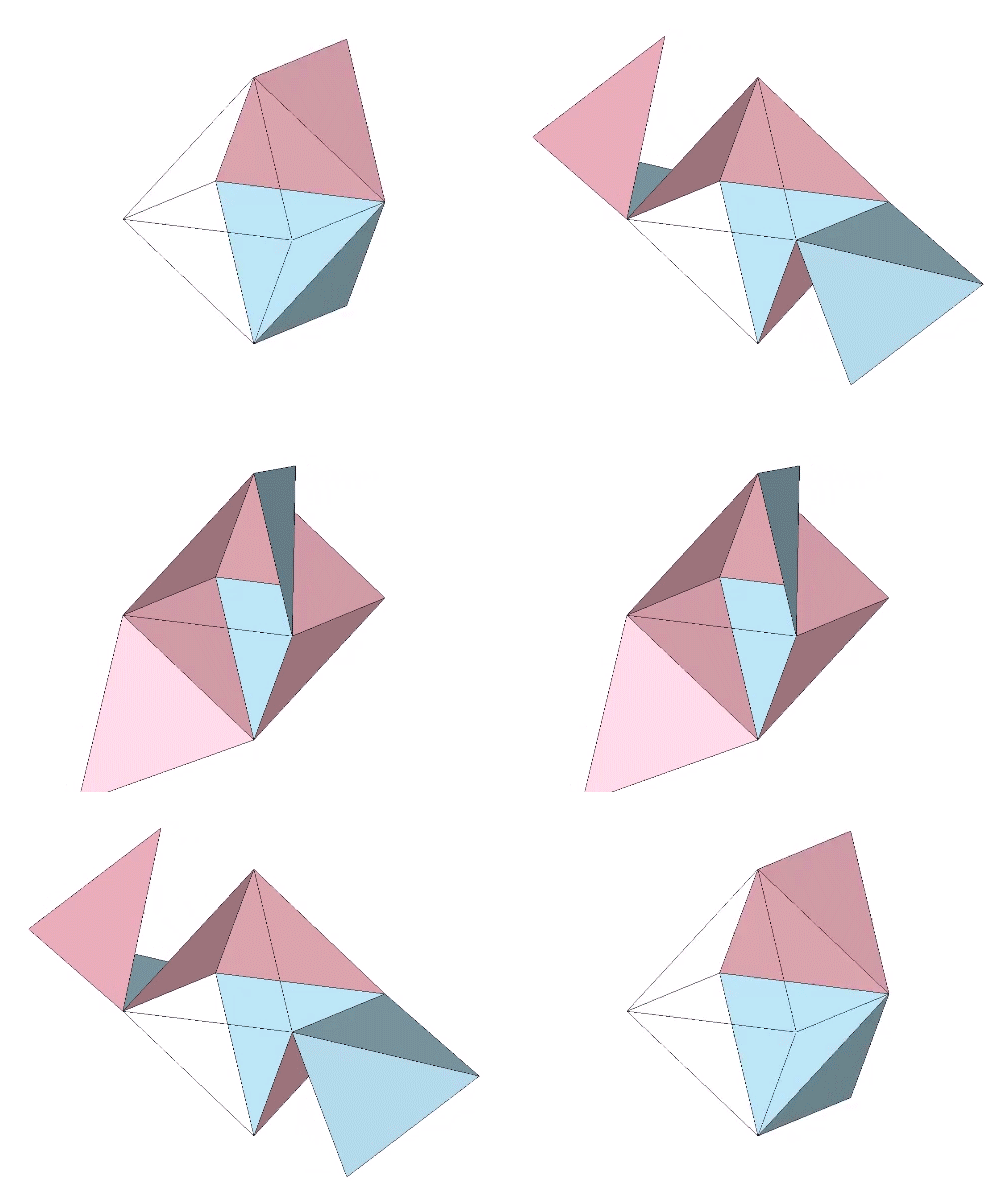
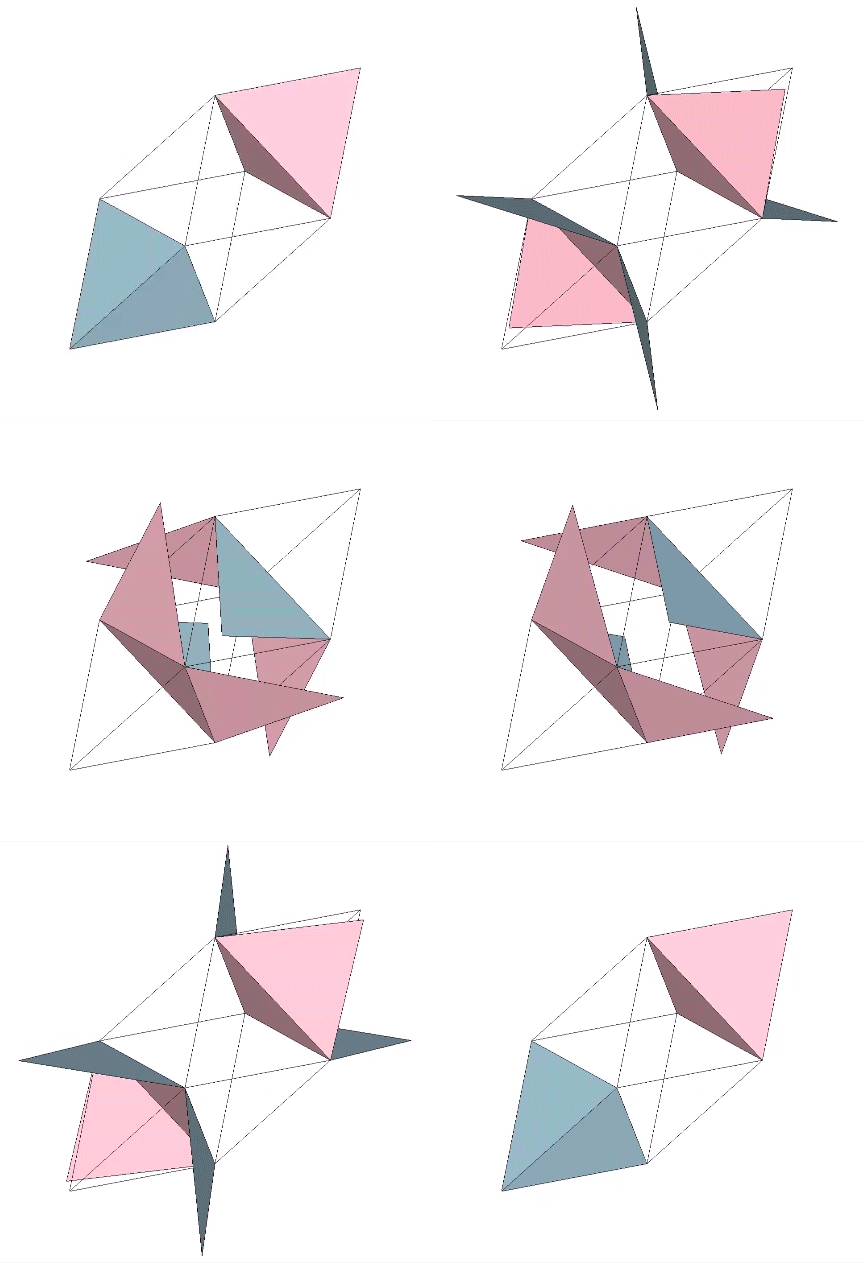
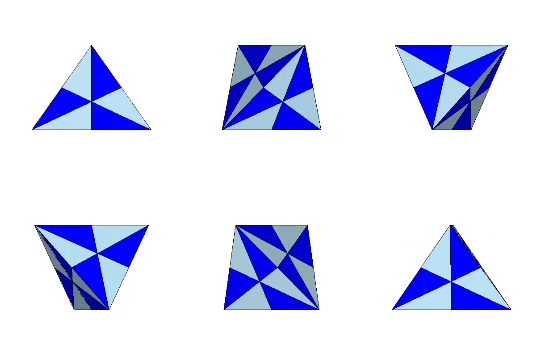
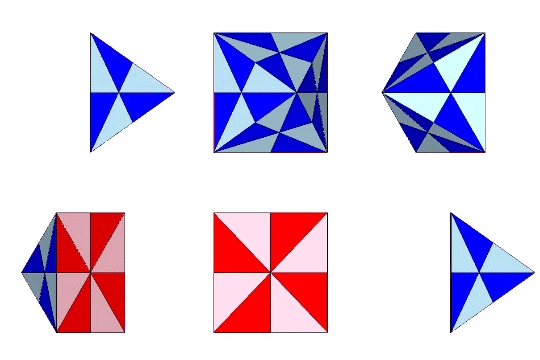
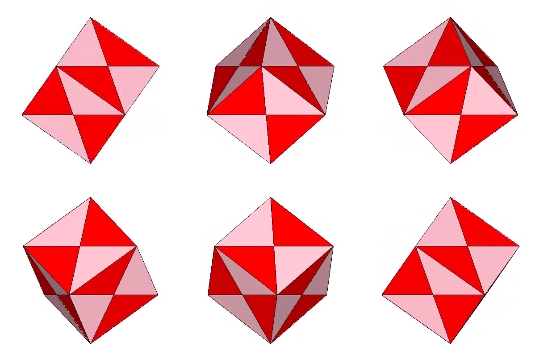
The bow-tie construction of the rhombic dodecahedron has an extra arc along the short diagonal of each of its rhomboid faces. Removing the extra arc discloses the spherical rhombic dodecahedron as the equivalent of two tetrahedra, one positive and one negative.
The spherical rhombic dodecahedron consists of two spherical tetrahedra, one positive and one negative
Turning a regular tetrahedra inside-out, i.e., forcing a vertex through its opposite face (the tetrahedron is the only regular polyhedron that can do this), produces either the star tetrahedron, or the tetrahelix, and neither close-pack to fill all-space. In fact, it’s possible that no two tetrahedra in the helical and star structures produced by serial inside-outing will ever have precisely the same orientation in a fixed coordinate system. Fuller may have attributed the difference between the tetrahedron’s mirror-image, inside-outing polarity and its rotational, axial polarity to the multiplicative (concave-convex) vs. additive (polar) duality of all polyhedral systems. (See: The Multiplicative and Additive Two.)
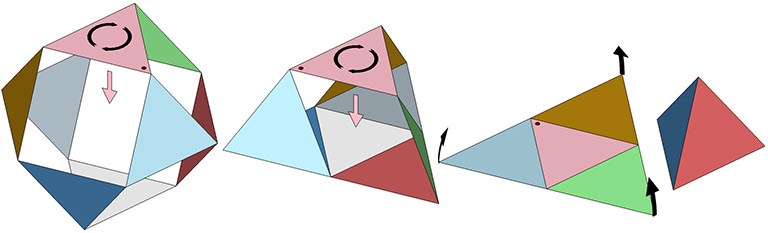
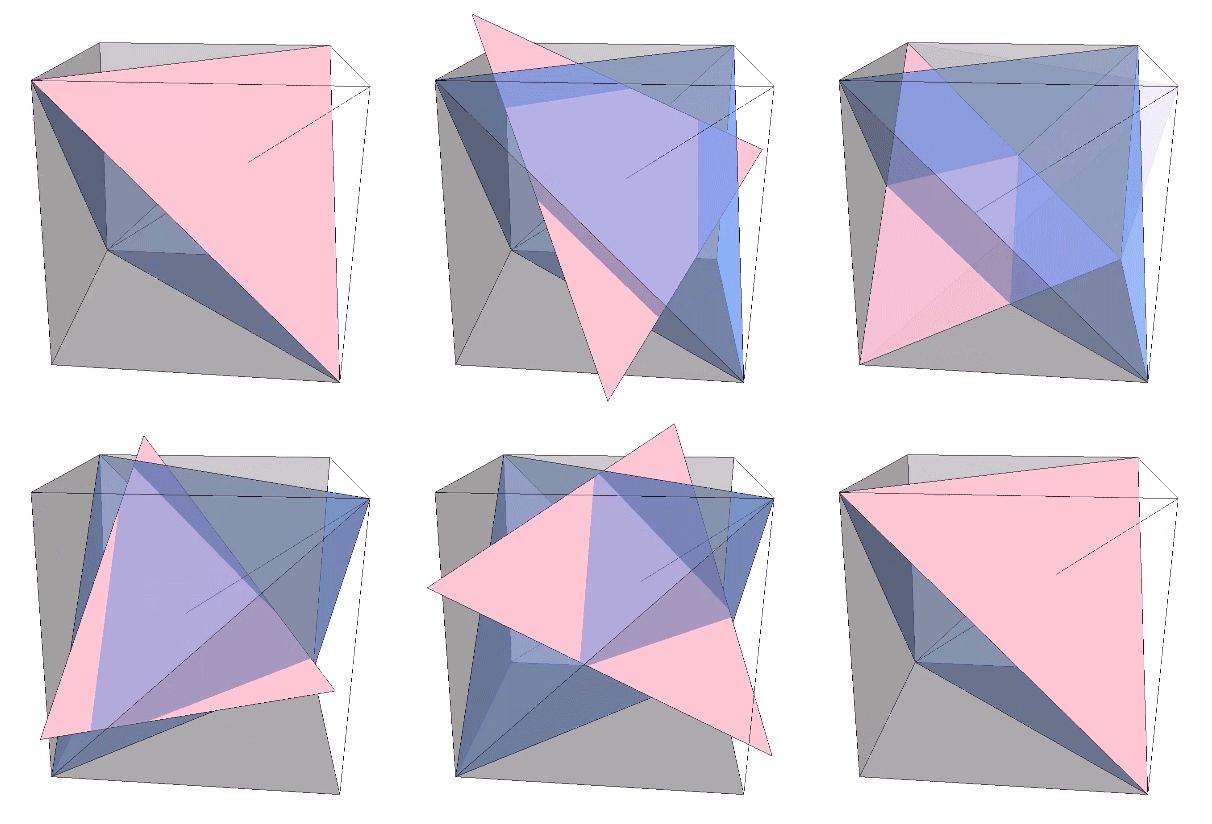
Perhaps a more interesting model of the tetrahedron turning itself inside out is one that results in an octahedron rather than another tetrahedron. The faces of the regular octahedron can be unfolded like the petals of flower to produce two tetrahedra, one positive and one negative with rotational (non-mirror-image) polarity. The rotation along the fold lines is exactly 180° from tetrahedron to octahedron, or from octahedron to tetrahedron. We may conclude that the octahedron is two tetrahedra turned inside out.
The faces of a regular octahedron may be unfolded to produce one positive and one negative tetrahedron, and vice versa.
That the octahedron’s volume is 4 compared with the tetrahedra’s combined volume of 2 suggests a transformative model for the tetrahedron’s fundamental and inseparable duality.
Note: Fuller often remarked on the tetrahedron’s unique ability to turn itself inside out, i.e., any one of its vertices may be passed through its opposite face, thereby exchanging inside for outside like a rubber glove. For me, however, this process isn’t so much an oscillation between positive and negative tetrahedra, which is a four-dimensional phenomenon of the jitterbug transformation, but rather, a linear (or helical) phenomenon in two dimensions. See: Tetrahelix.
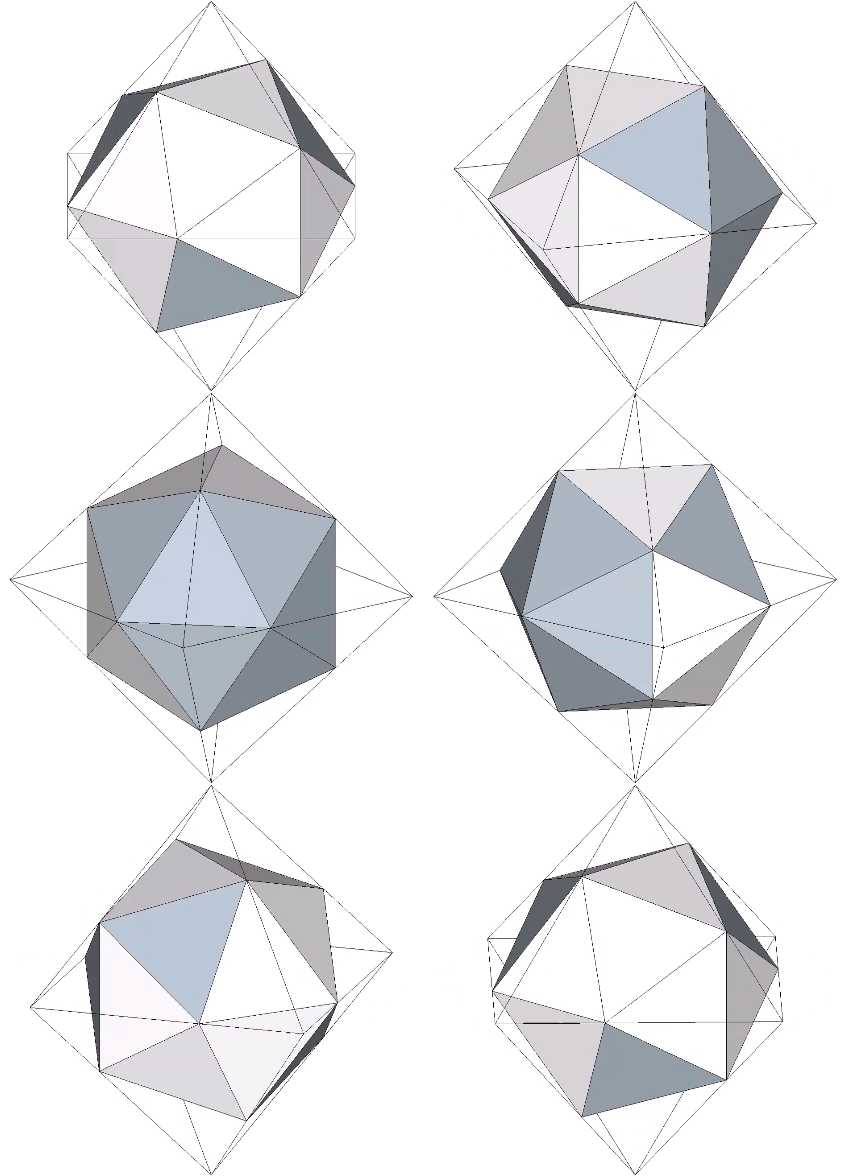
The regular icosahedron can be nested inside the regular octahedron so that eight of its faces are coincident with the eight faces of the enclosing octahedron.
The regular icosahedron inscribed within the regular octahedron
The icosahedron’s face is skewed at an angle of 37.76125° (arctan(√(3/5)) from the face of the octahedron and divides its edges into lengths corresponding to golden ratio (Φ).
The face of the inscribed icosahedron divides the octahedron’s unit edge into 1/φ and 1/(1+φ), at angles of arctan(√(3/5)) ≈ 37.76125° and arctan(√(5/3)+30°) ≈ 82.23875°.
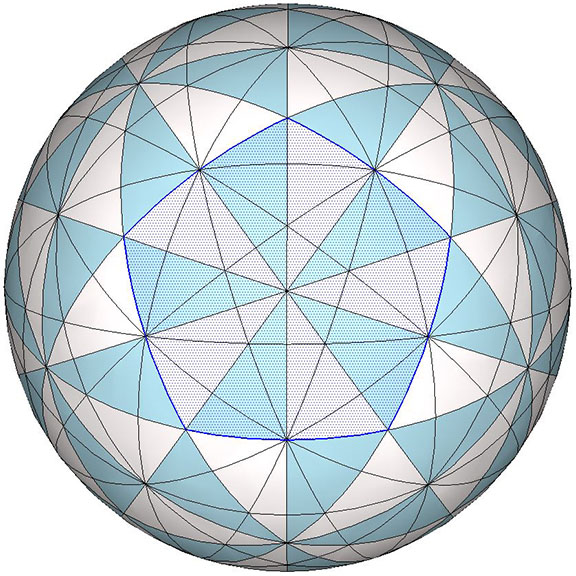
The same relationship is disclosed in the 31 great circles of the icosahedron. The faces of both the spherical octahedron and the spherical icosahedron are divisible by whole numbers of the Basic Disequilibrium LCD Triangle.
The 31 great circles of the icosahedron (and the 120 Basic Disequilibrium LCD Triangles) disclosing the spherical icosahedron inside the spherical octahedron in exactly the same orientation shown above.
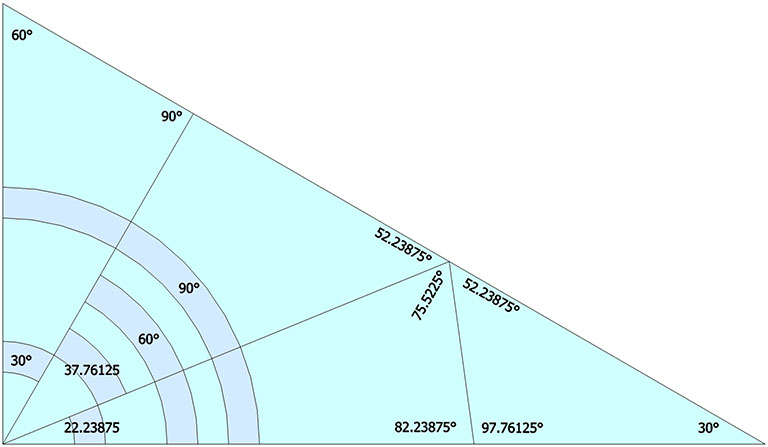
The projection of the Basic Disequilibrium LCD Triangle onto the regular icosahedron discloses the same angles at which the icosahedron’s face is skewed from the face of its enclosing octahedron: 37.76125° (arctan(√(3/5)) and 82.23875° (arctan(√(5/3)+30°).
Projection of the Basic Disequilibrium LCD Triangle onto the face of the regular icosahedron. The three angles comprising the right angle are identical with the rotations of the jitterbug
The angles at which the icosahedron’s face is skewed from the face of the enclosing octahedron are identical with the angles of rotation in the jitterbug corresponding to the space-filling complement to the regular icosahedron. See: Icosahedron Phases of the Jitterbug.
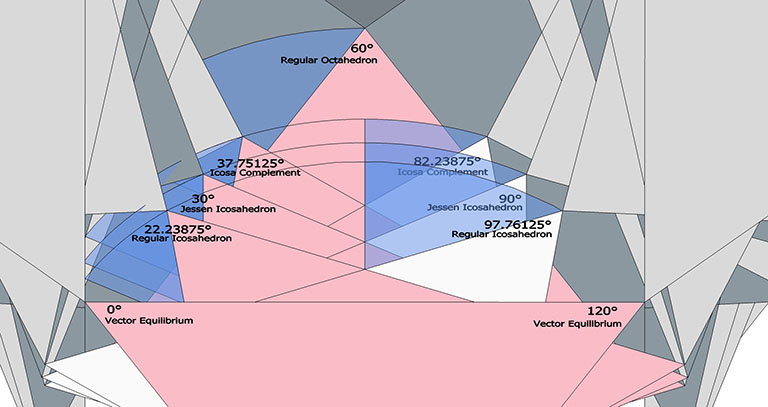
Note further that all of the surface angles in the icosahedron projection of the spherical LCD triangle are identical with the rotations in the jitterbug: the regular icosahedron at 22.23875° (arctan(√(5/3)-30°) and 97.76125° (arctan(√(3/5)+60°); the Jessen icosahedron or tensegrity equilibrium at 30° and 90°; the space-filling complement to the regular icosahedron at 37.76125° (arctan(√(3/5)) and 82.23875° (arctan(√(5/3)+30°), and the regular octahedron at 60°.
The rotations of the jitterbug corresponding to the regular icosahedron, the Jessen icosahedron, and the space-filling complement to the regular icosahedron, the octahedron, and the vector equilibrium.
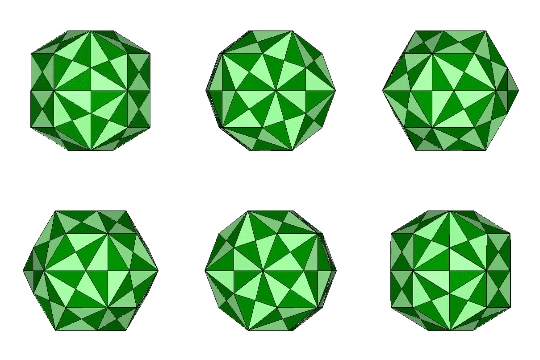
The 31 great circles of the icosahedron disclose the following spherical polyhedra: the octahedron; icosahedron; pentagonal dodecahedon; icosidodecahedron; tricontahedron; and VE.
Octahedron
The two octahedra, the icosahedron, the pentagonal dodecahedron, and the tricontahedron, as well as the basic disequilibrium LCD triangle, are all disclosed in the 15 great circles defined by the icosahedron’s 15 edge-to-edge axes of spin. Each face of spherical octahedron contains 15 of the 120 LCD triangles.
Octahedron (with Inscribed Icosahedron)
The inscribed face of the regular icosahedron contains 6 of the 120 LCD triangles.
Pentagonal Dodecahedron
Each face of the pentagonal dodecahedron contains 10 of the 120 LCD triangles.
Triacontahedron
Each face of the triacontahedron contains 4 of the 120 LCD triangles
Icosidodecahedron
The icosidodecahedron is disclosed in the set of 6 great circles defined the icosahedron’s 6 vertex-to-vertex axes of spin. Both the triangular and pentagonal faces of the icosidodecahedron contain only partial LCD triangles.
Vector Equilibrium (VE or Cuboctahedron)
The vector equilibrium (VE) is disclosed in the 10 great circles defined by the icosahedron’s 10 face-to-face axes of spin. Both the triangular and square faces of the spherical vector equilibrium contain only partial LCD triangles.
The 25 great circles of the vector equilbrium (VE) disclose the following spherical polyhedra: the octahedra; the vector equilibrium (VE); the tetrahedron; the rhombic dodecahedron; and the cube.
Octahedron
The spherical octahedron is disclosed in the 3 great circles defined by the VE’s 3 square-face-to-face axes of spin. Each face contains 6 of the 48 LCD triangles.
Vector Equilibrium (VE or Cuboctahedron)
The spherical VE is disclosed in the 4 great circles defined by the VE’s 4 triangular-face-to-face axes of spin. Both the triangular and the square face contain only partial LCD triangles.
Tetrahedron
The spherical tetrahedron, rhombic dodecahedron, and cube are disclosed in the 6 great circles of the VE’s 6 vertex-to-vertex axes of spin. Each face contains 12 of the 48 LCD triangles.
Rhombic Dodecahedron
Each face of the spherical rhombic dodecahedron contains 4 of the 48 LCD triangles.
Cube
Each face of the spherical cube contains 8 of the 48 LCD triangles.
Octahedron (alternate)
An alternate spherical octahedron is disclosed in the 12, 6, and 4 great circles defined by the VE’s 12 edge-to-edge, 6 vertex-to-vertex, and 4 triangular-face-to-face axes of spin. Each face contains 3 full, and 6 partial LCD triangles.
“The whole of synergetics’ cosmic hierarchy of always symmetrically concentric, multistaged but continually smooth (click-stop subdividing), geometrical contracting from 20 to 1 tetravolumes (or quanta) and their successive whole-number volumes and their topological and vectorial accounting’s intertransformative convergence-or-divergence phases … elucidate conceptually, and by experimentally demonstrable evidence, the elegantly exact, energetic quanta transformings by which:
energy-exporting structural systems precisely accomplish their entropic, seemingly annihilative quantum “losses” or “tune-outs,” and;
new structural systems appear, or tune in at remote elsewheres and elsewhens, thereafter to agglomerate syntropically with other seemingly “new” quanta to form geometrically into complex systems of varying magnitudes, and how;
such complex structural systems may accommodate concurrently both entropic exporting and syntropic importing, and do so always in terms of whole, uniquely frequenced, growing or diminishing, four-dimensional, structural-system quantum units.”
—R. Buckminster Fuller, Synergetics, 270.11
With the regular tetrahedron as the unit measure of volume, most of the regular polyhedra have whole number or rational volumes. Fuller takes credit for this discovery and considered it one his most significant.
Image
Polyhedron
Volume in Tetrahedra
Quanta Modules
Tetrahedron
1
Total: 24; A: 24; B: 0
Half Octahedron
2
Total: 48; A: 24; B: 24
Cube (unit diagonal)
3
Total: 72; A: 48; B: 24
Octahedron
4
Total: 96: A: 48; B: 48
Rhombic Triacontahedron
5
Total: 120: A: 0; B: 0; T: 120
Rhombic Dodecahedron
6
Total: 144; A: 96; B: 48
Note that the volume 5 rhombic triacontahedron is constructed, uniquely, of T quanta modules. Though the T module is identical in volume to the A and B quanta modules, and therefore rationally commensurate with the regular tetrahedron, all of its edge lengths—and the edge lengths of the rhombic triacontahedron constructed from them—are irrational. The in-sphere diameter of the volume 5 rhombic triacontahedron—and the outside edge of the unfolded T Module (×2)—is about 0.9994833324, so very close to 1 that Fuller assumed it had to be a computational error. Mathematicians eventually convinced him that the difference was real and measurable. For further discussion on this topic, see T and E Quanta Modules.
Other polyhedra so far discovered with whole number volumes in tetrahedra include the Kelvin truncated octahedron with a volume of 96, the pyritohedron, with a volume of 24, and, presumably, the tetrakaidecahedron of the Weaire-Phelan matrix which should have the same volume as its companion pyritohedron. See The Kelvin Truncated Octahedron, and; Pyritohedron Dimensions and Whole-Number Volume.

















 The Geometry of Thinking