The 60-strut tensegrity sphere is the spherical, or tensor equilibrium phase of the rhombic triacontahedron and its dual, the icosidodecahedron. It also reduces to the double-edge icosahedron and its dual, the double-edge pentagonal dodecahedron.
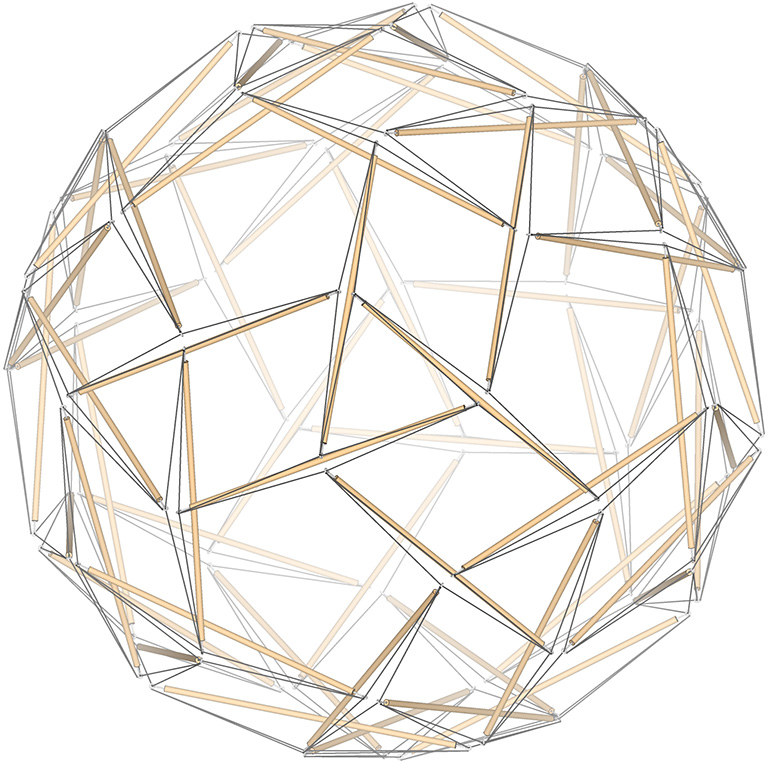
The rhombic triacontahedron is the dual of the icosidodecahedron.
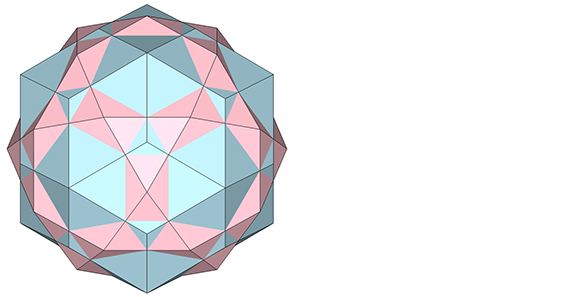
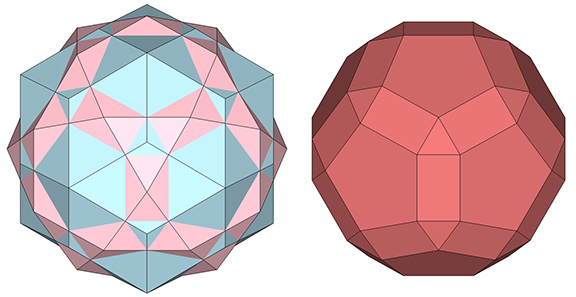
Rectification of either (or the intersection of both) produces a non-uniform rhombicosidodecahedron.
The 120 edges of a rhombicosadodecahedron consist of twelve intersecting decagons (10-sided polygons). If we make the twelve decagons uniform and connect alternate vertices, we produce twelve pentagons whose edges align with the distribution of the struts in the 60-strut tensegrity sphere.
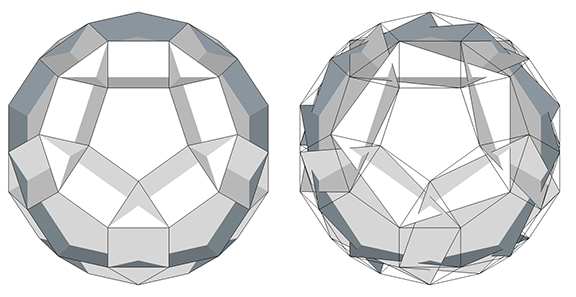
Each of the twelve intersecting pentagons of the 60-strut tensegrity sphere consists of five struts and the triangular cross section of the valley formed by the tendons connecting each strut-pair to its dangler. The dimensions of this triangular cross-section are illustrated below.
- n (number of sides of the polygon) = 5
- δ = 180°/n = 36°
- S = strut length
- d (vertical distance from polygon’s edge to strut) = S×tan(δ/2)/4
- d’ (height of the triangle formed by the strut ends and the polygon’s vertex) = d×cos(δ)
- h (height of the triangle formed by the strut ends and the midpoint of their dangler strut) = d+d’
- gap (distance between strut ends) = S×sin²(δ/2)/2
- dip (distance from strut end to midpoint of dangler strut) = S×sin(δ/2)/2
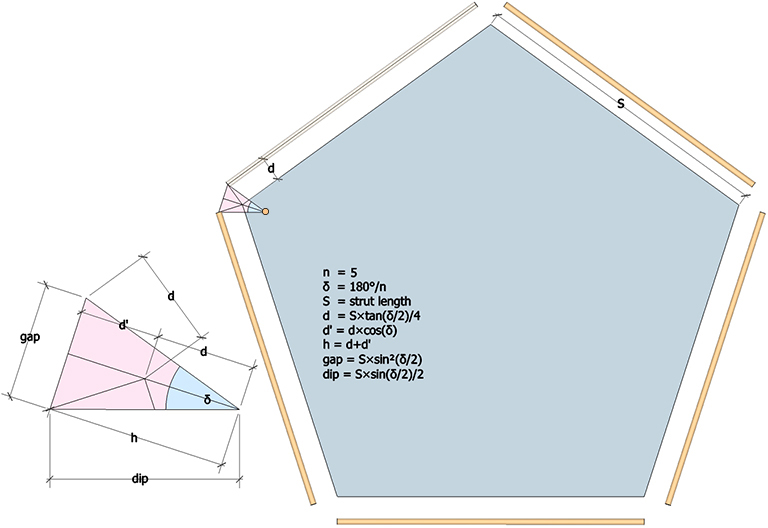
In its spherical, or equilibrium phase, the dimensions of the cross section of the tension valley created by the tendons reach their maximum. In its polyhedral phases (described below), δ approaches to 0°, and both the gap and dip go to zero (0).
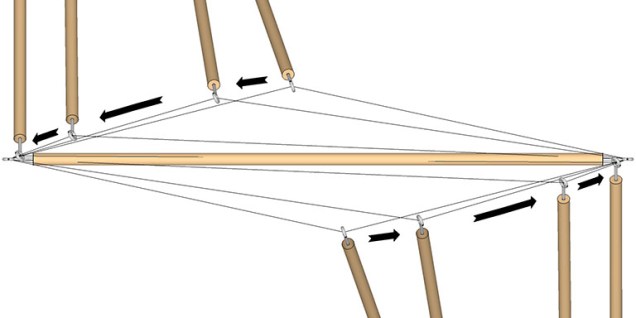
Transformation of the 60-Strut Tensegrity Sphere to the Tensegrity Rhombic Triacontahedron
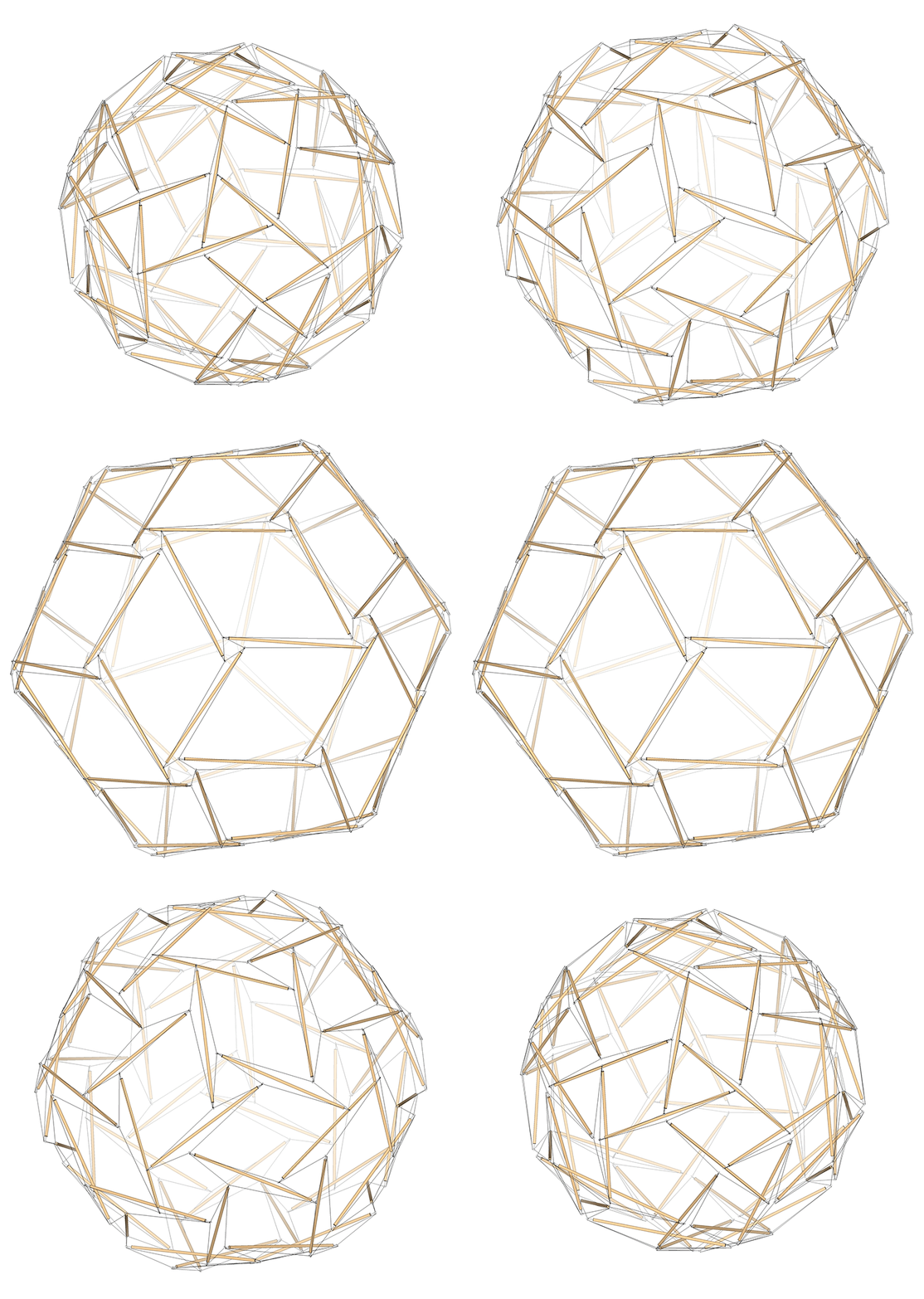
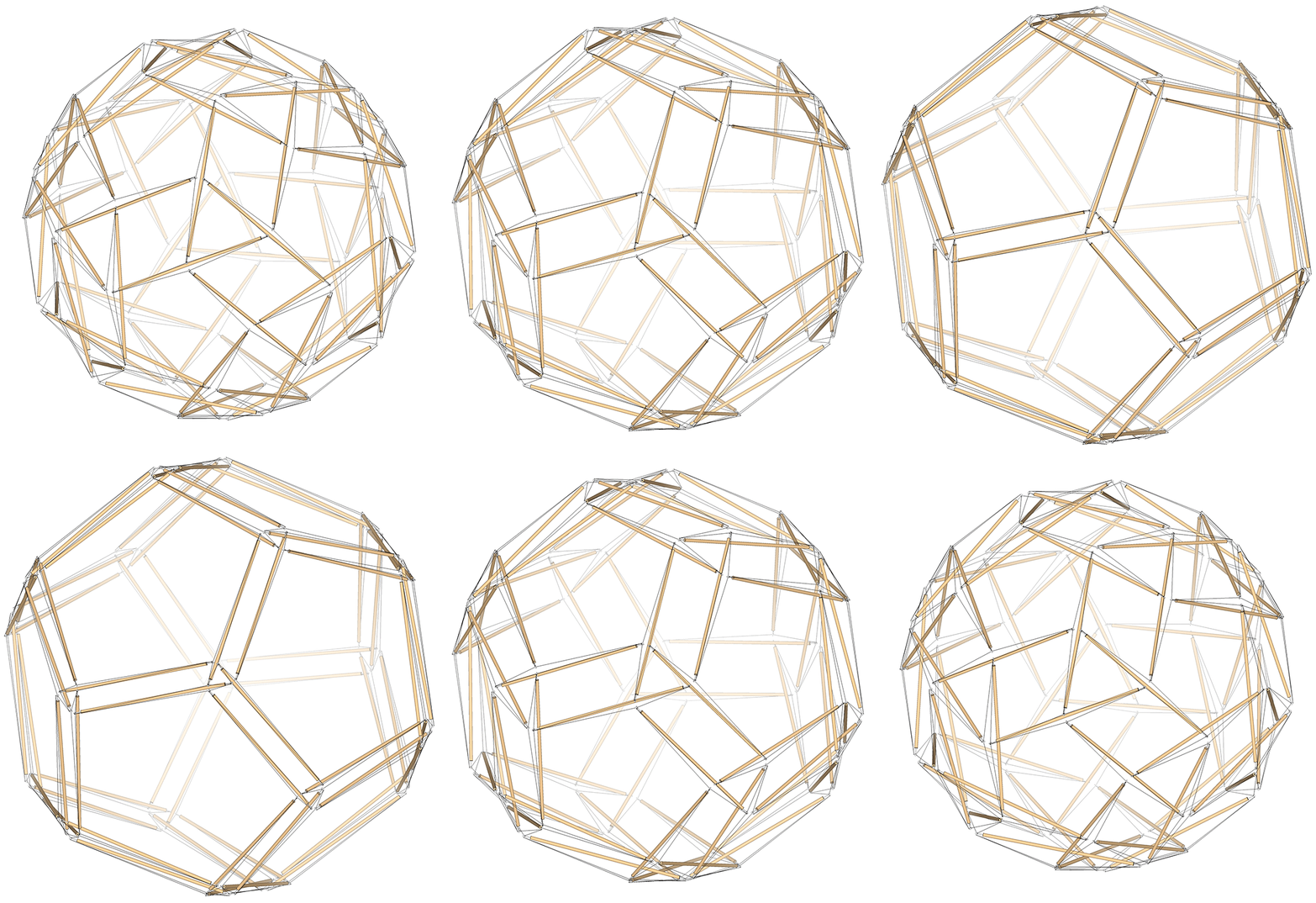
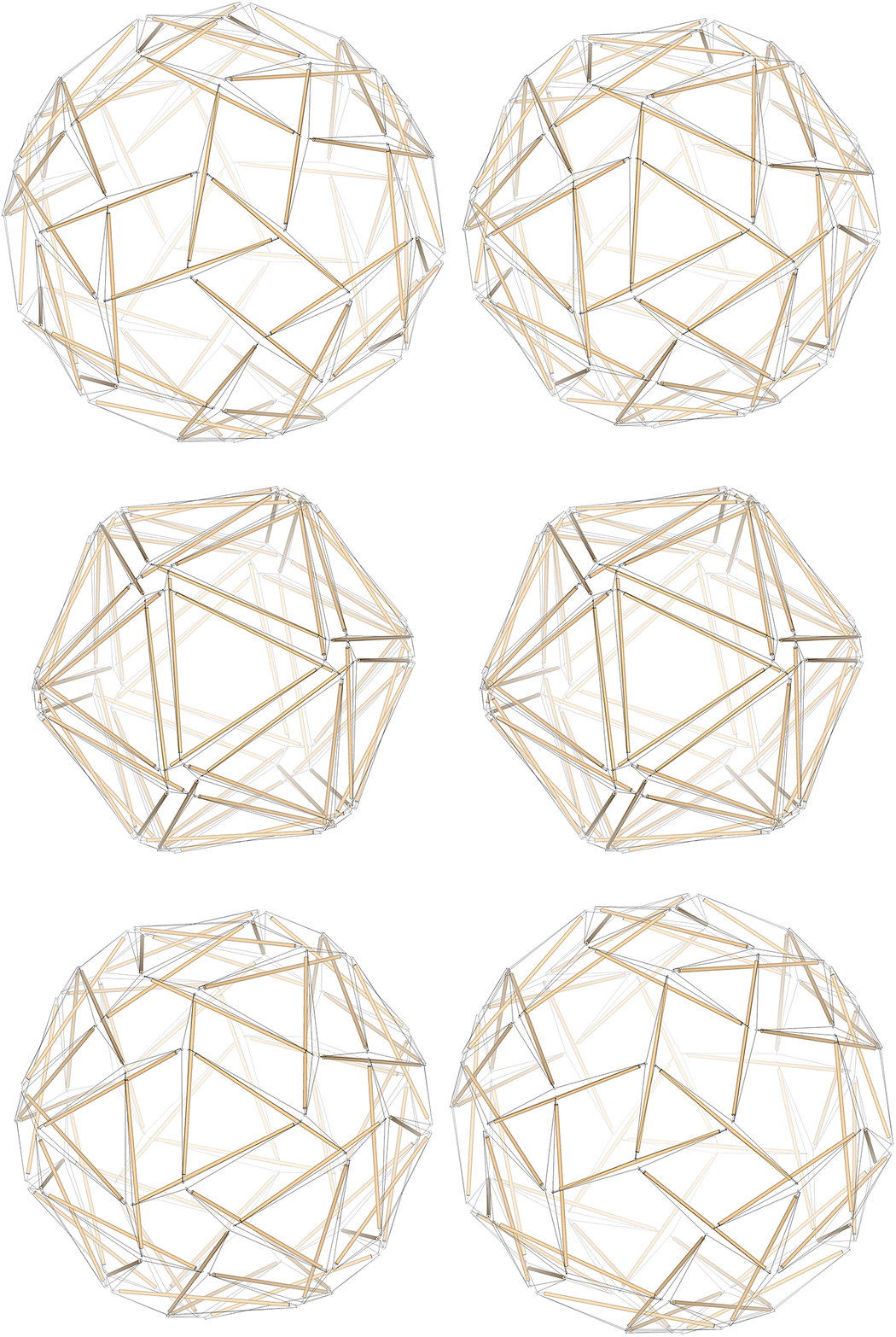
From the spherical phase, the 60-strut tensegrity sphere is reduced to the tensegrity rhombic triacontahedron by moving each strut along the short tendon toward the end of its dangler, as illustrated below.
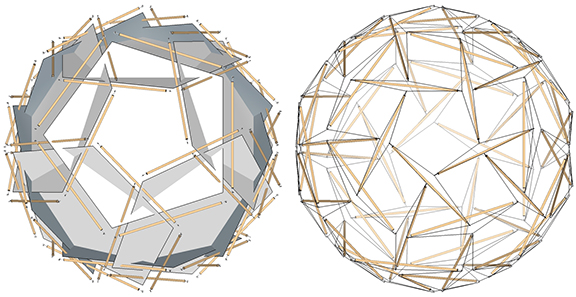
The surface of the 60-strut tensegrity sphere describes twenty triangular tendon-loops, twelve pentagonal tendon-loops, and thirty rhombic loops.
In the transition to the rhombic triacontahedron, the thirty rhombic tendon loops transform into the rhombic triacontahedron’s thirty rhombic faces, the twelve pentagonal loops and twenty triangular loops transform into its 5- and 3-vector vertices respectively.
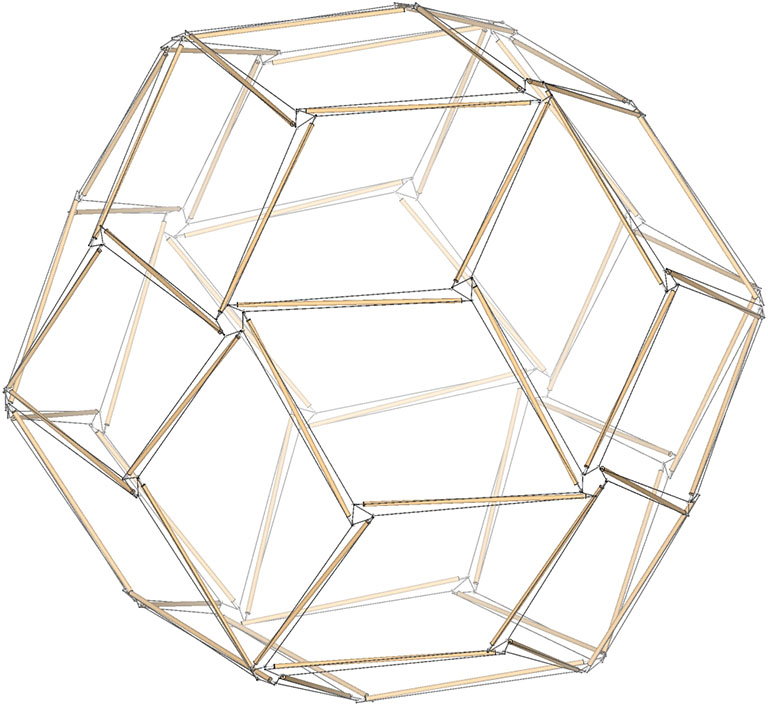
Transformation of the 60-Strut Tensegrity Sphere to the Tensegrity Icosidodecahedron
From its spherical phase, the 60-strut tensegrity sphere is reduced to the tensegrity icosidodecahedron by moving each strut along the long tendon toward the end of its dangler, as illustrated below.
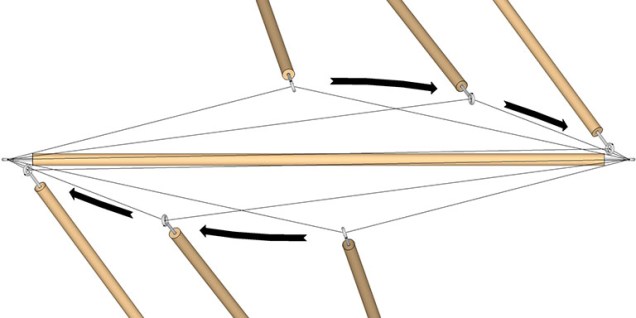
In the transition to the icosidodecahedron, the thirty rhombic tendon loops transform into the icosidodecahedron’s thirty vertices, while the the twelve pentagonal and twenty triangular loops transform into its twelve pentagonal and twenty triangular faces.
Transformation of the 60-Strut Tensegrity Sphere to Double-Edge Tensegrity Pentagonal Dodecahedron
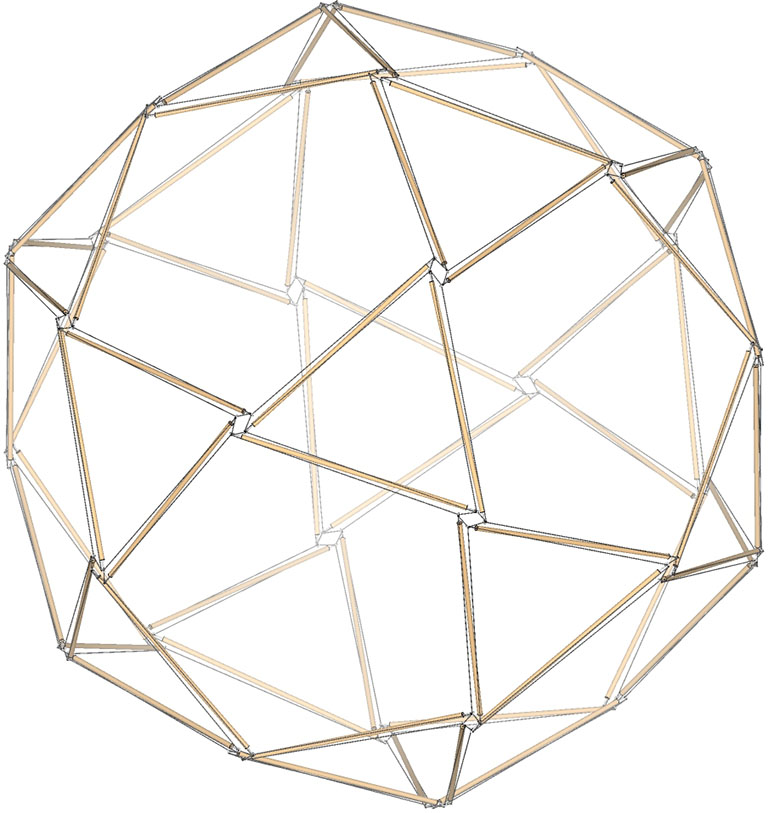
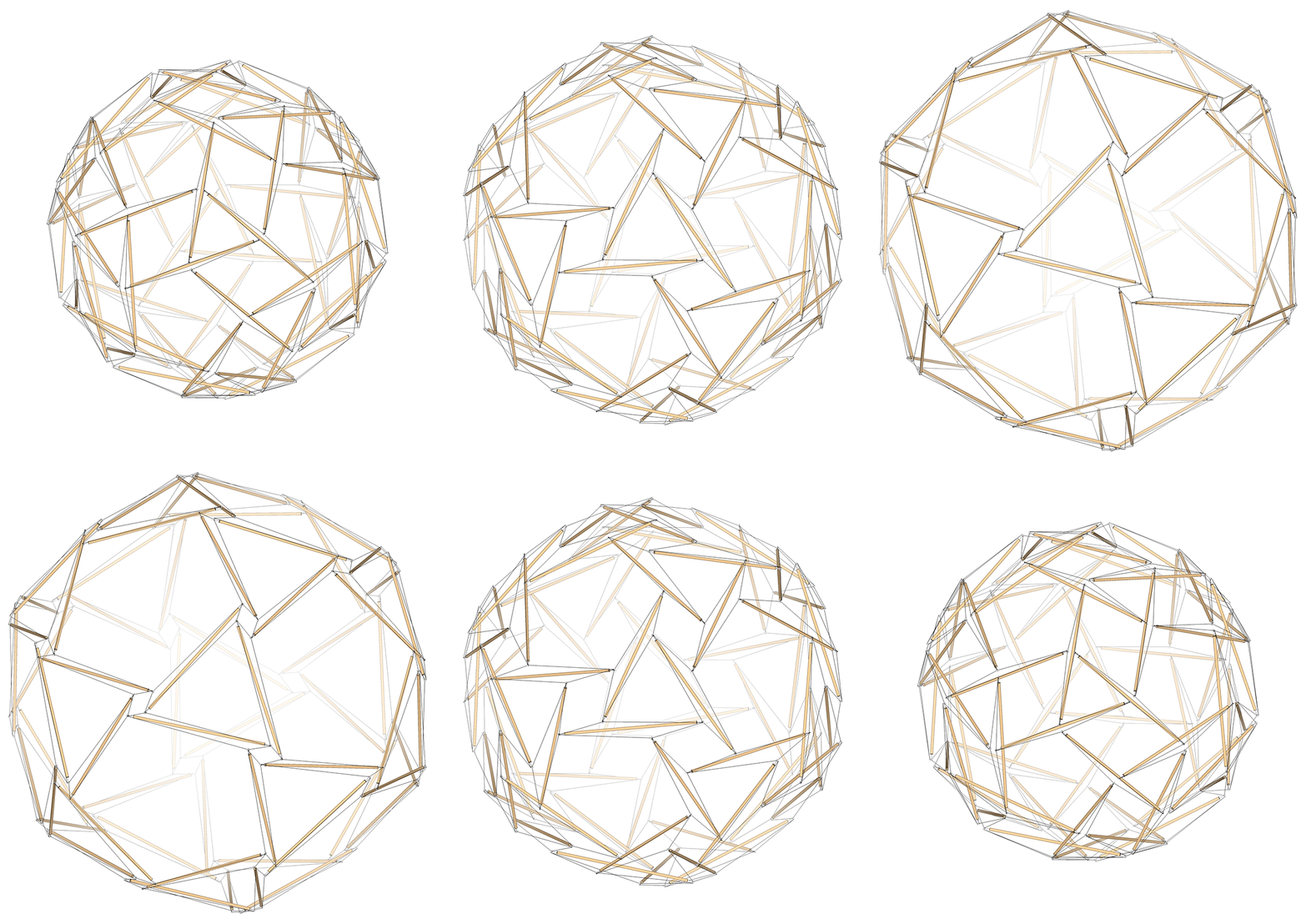
From its spherical phase, the 60-strut tensegrity can be transformed into a double-edge pentagonal dodecahedron or a double-edge icosahedron by moving the strut pairs together to either the left or right end of their danglers. That is, one strut moves along the short tendon, while the other moves along the long tendon toward the same end of their dangler.
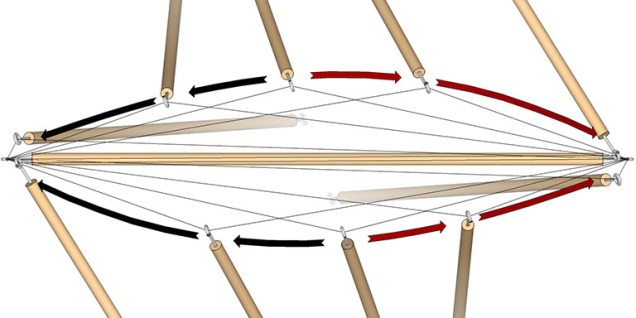
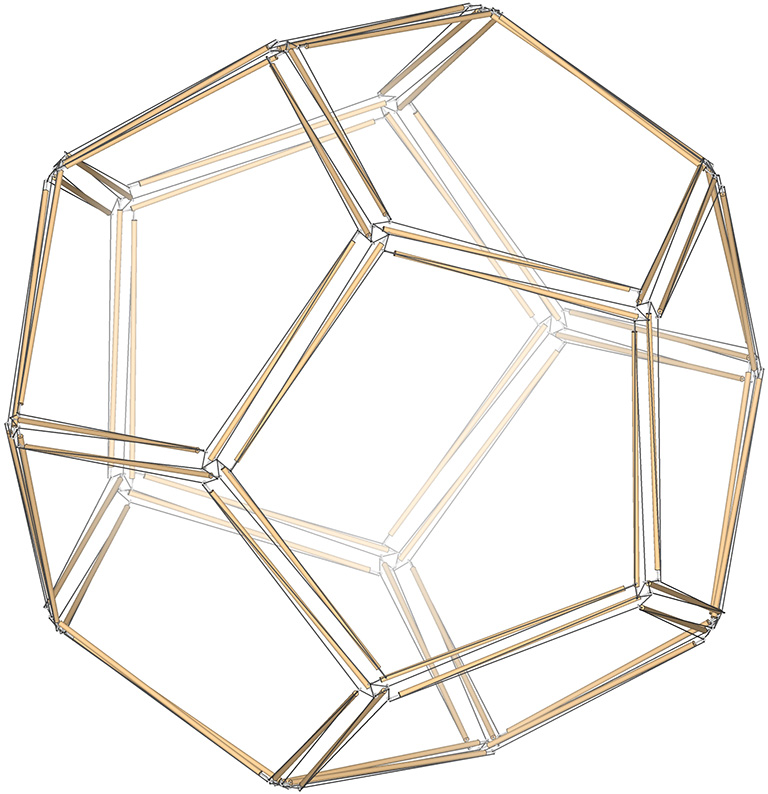
In the illustration below, the 60-strut tensegrity sphere’s twenty triangular loops have contracted to form the vertices of the double-edge pentagonal dodecahedron, while the twelve pentagonal tendon loops have expanded into its twelve pentagonal faces, and the thirty rhombic tendon loops have transformed into its thirty edges.
Transformation of the 60-Strut Tensegrity Sphere to the Double-Edge Tensegrity Icosahedron
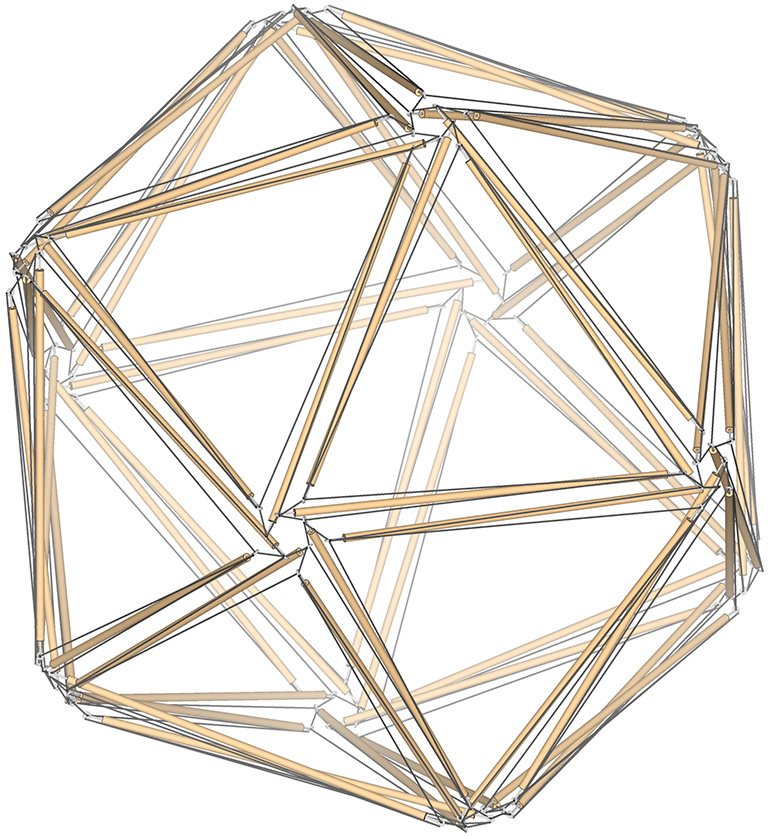
In the illustration below, the twelve pentagonal loops have contracted to form the twelve vertices of the double-edge tensegrity icosahedron, while the twenty triangular tendon loops have expanded into its twenty faces, and the thirty rhombic tendon loops have transformed into its thirty edges.


Great analytical work! Could you find some connections with real forms from the mineral or from the organic realms? I mean, do you envision some practical application for this kind of structure? Maybe in some man-made / AI-augmented projects?
Thanks! I certainly believe this work is applicable to engineering, and not just in terms of inventing new technologies, but toward a broader and more engaged understanding of basic science.
Greg, thank you for your magnificent work! I have long loved your clear and detailed overviews of much overlooked forms, especially transformational structures. Tensegrity is well respected in many disciplines, especially in our greater understanding of the body, with Don Ingber’s brilliant work leading the Wyss Institute at Harvard (he discovered and documented that the cytoskeleton is a tensegrity network in 1997). Tensegrity is deeply important in space structures and engineering, as well as architecture on a nanoscale. It even figures into the latest consciousness research. Biotensegrity is becoming better accepted and tensegrity is a true, scale-free approach to the built environment. ~Bonnie