This is a supplement to a previous article, Great Circles: The 31 Great Circles of the Icosahedron, with new illustrations I hope will add clarity to the topic.
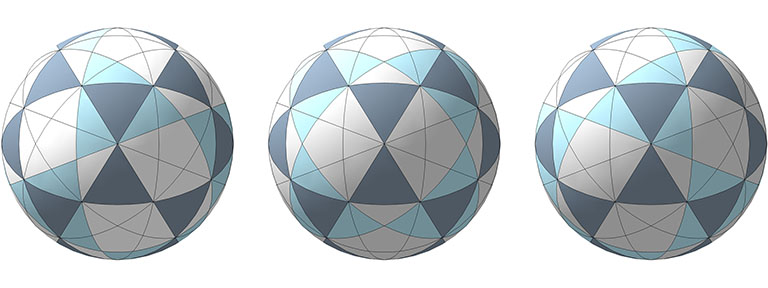
The figure below illustrates the full set of 31 great circles described by rotations about the regular icosahedron’s axes of symmetry.
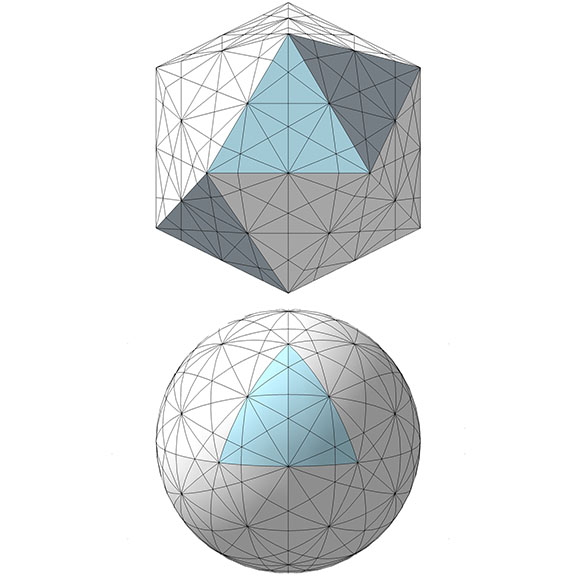
The 31 great circles are divided into three sets according to their spin axes. Axes running through diametrically opposing vertices generate the set of 6 great circles. Axes running through opposite faces generate the set of 10 great circles. And axes running through the midpoints of diametrically opposing edges generate the set of 15 great circles.
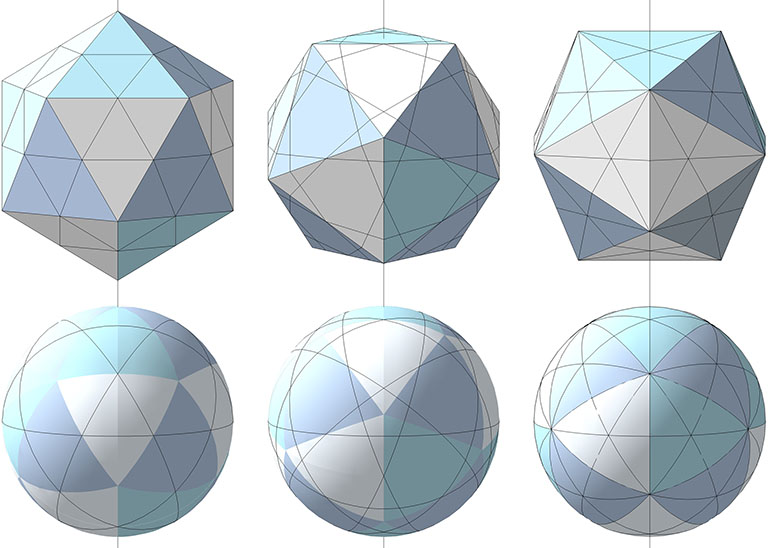
6 Great Circles
The set of 6 great circles circumscribes the equators of the six spin axes that pass through the icosahedron’s opposing vertices, and together they disclose the spherical icosidodecahedron.
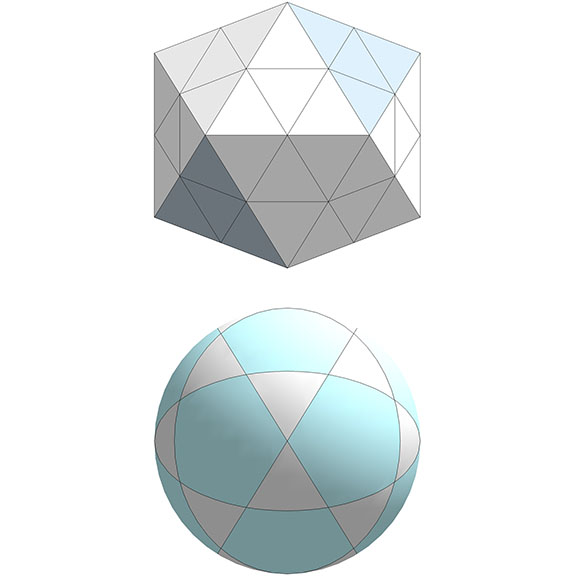
15 Great Circles
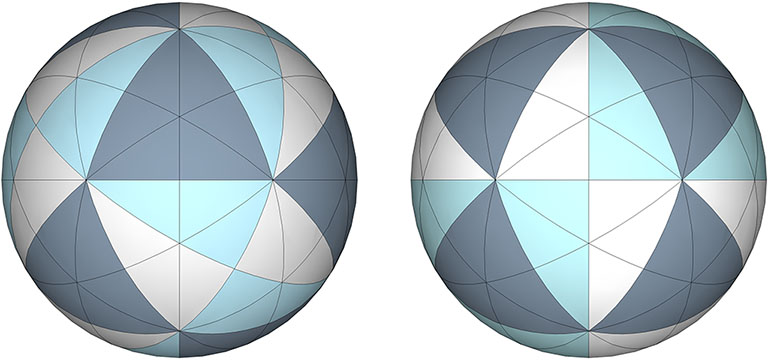
The set of 15 great circles disclose the two orientations of the spherical octahedron, the spherical icosahedron, pentagonal dodecahedron, rhombic triacontahedron, and the 120 basic disequilibrium LCD triangles.
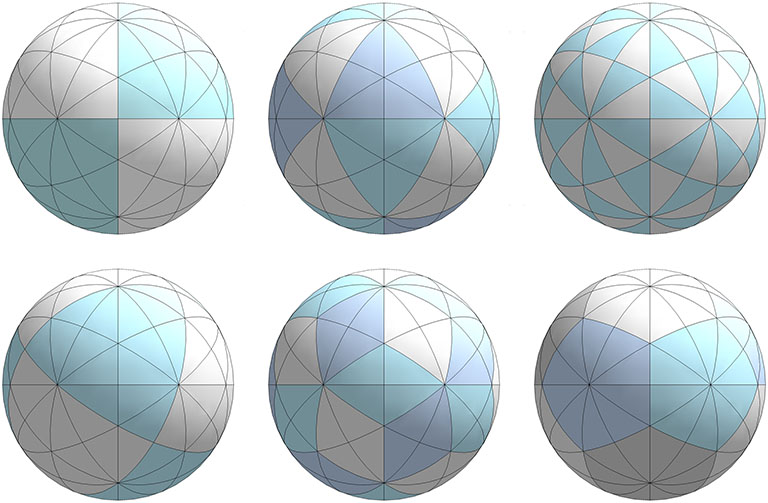
The same spherical icosahedron is symmetrically aligned with both orientations of the spherical octahedron. See also: Icosahedron Inside Octahedron.
10 Great Circles
The set of 10 great circles discloses three orientations of the spherical vector equilibrium (VE).
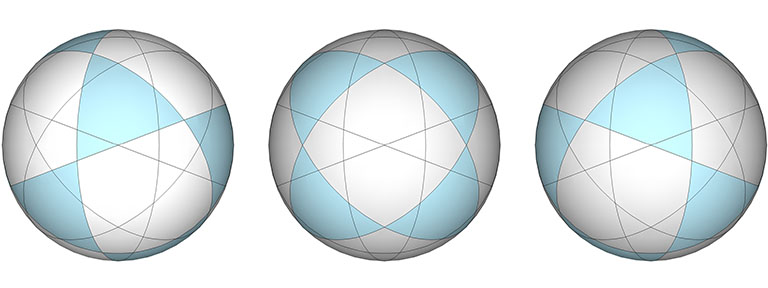
The same spherical icosidodecahedron (generated from the six great circles) is symmetrically aligned with all orientations of the spherical vector equilibrium (VE).
 The Geometry of Thinking