The Jessen Orthogonal Icosahedron fits neatly between two overlapping vector equilibria (VEs) in the isostropic vector matrix.
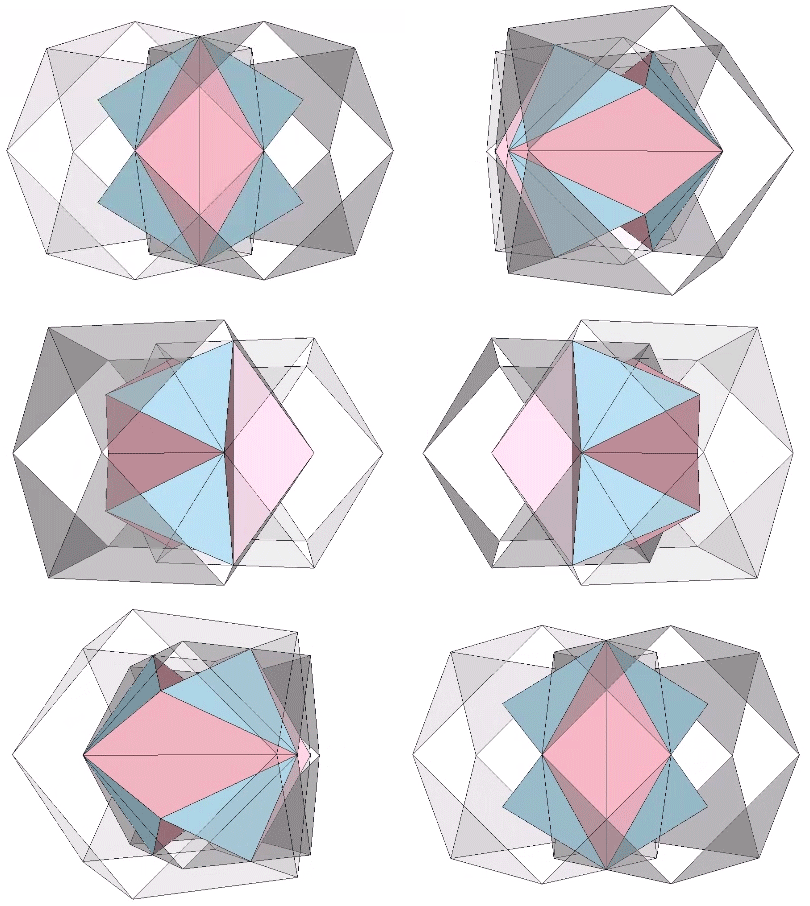
Click on image to open animation in new tab.
This is halfway between the nuclear sphere at the center of the VE and the space at the centers of its constituent octahedra. The location is apt, as the Jessen marks the halfway point in the jitterbug transformation between the VE and octahedron, i.e., between spheres and spaces.

The Jessen has a rational tetrahedral volume. If we attempt to isolate the space it occupies in the quanta module construction of the isotropic matrix, we discover that it can almost, but not entirely be modeled in A and B quanta modules.
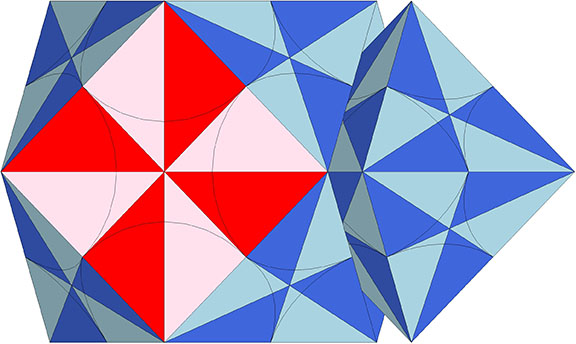
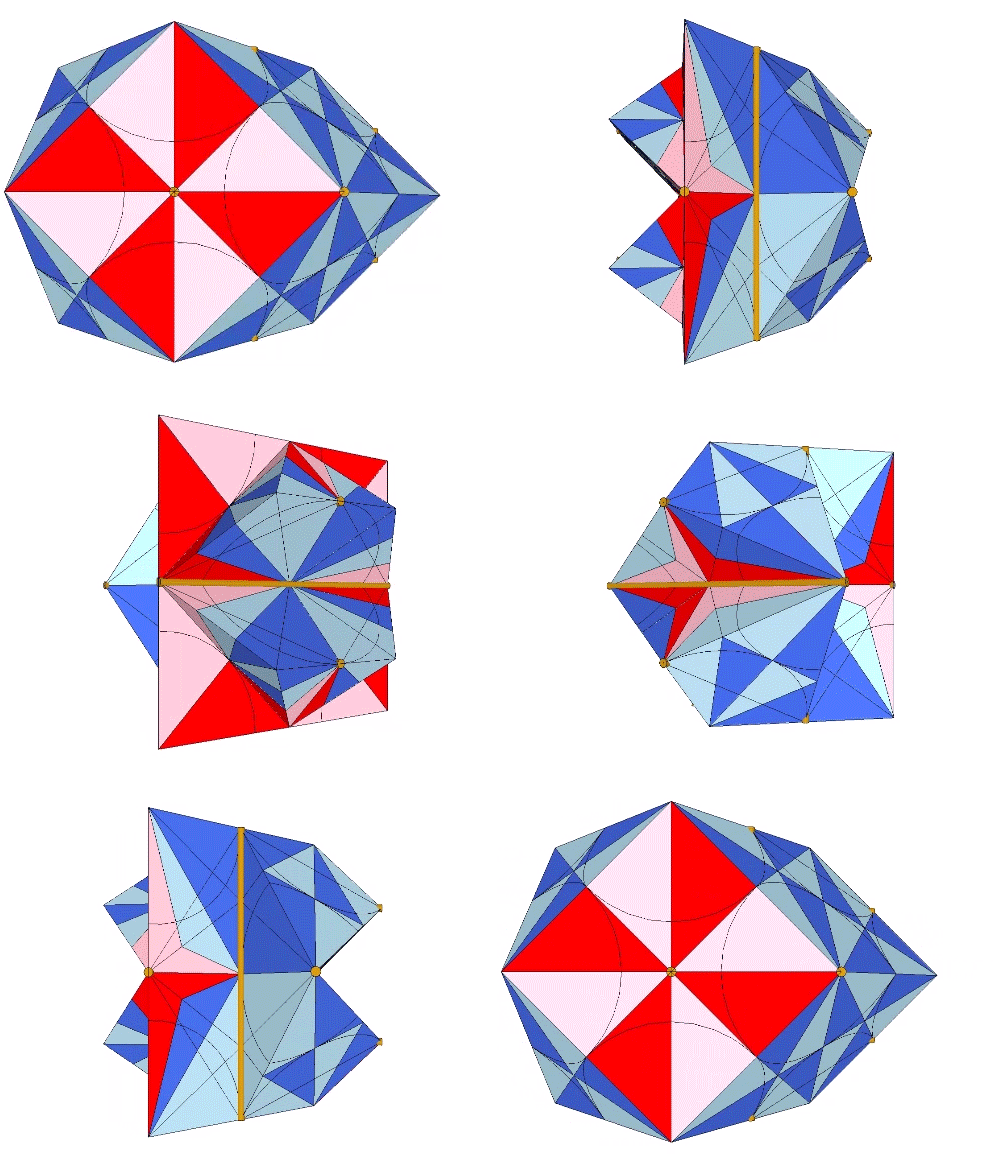
Click on lower image to open animation in new tab.
At the center of the quanta module construction of the Jessen is the eight-Mite coupler that joins spheres with spaces.
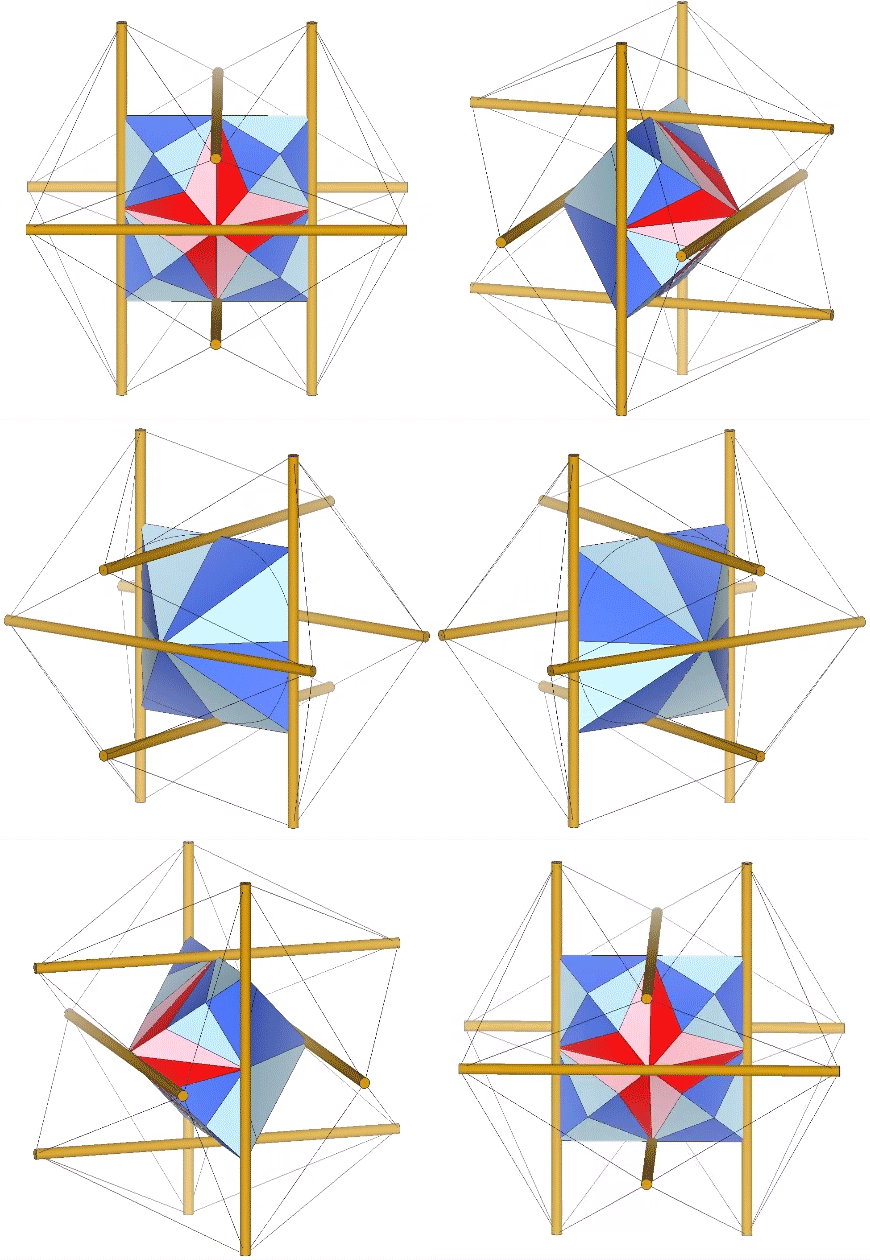
Click on image to view animation in new tab.
Note that the coupler is polarized and seems to point, forwards and backwards, along the vector of its displacement between the VE and octahedron, i.e. from the sphere in the direction of its adjoining space (or vice versa). The only other polyhedron whose quanta module construction is similarly polarized is the cube. The orientation of the cube in the quanta module construction of the isotropic vector matrix determines the polarity of the tetrahedron, and the six-strut tensegrity that defines the Jessen is the spherical phase of the tensegrity tetrahedron, the wave function, if you will, that collapses into either a positive or negative tetrahedron. (See also: Dual Nature of the Tetrahedron.)
 The Geometry of Thinking